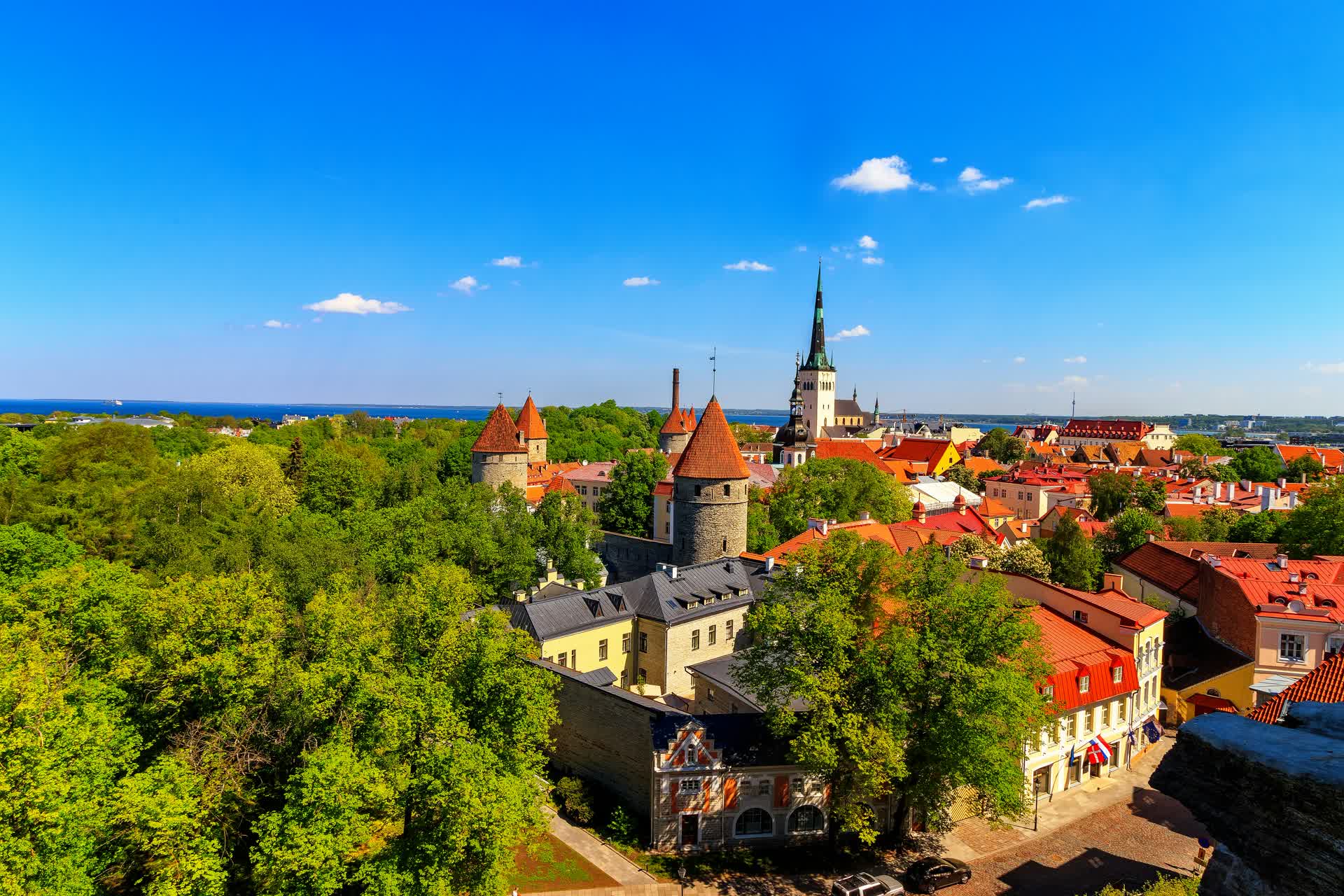
The top places to visit in Estonia are Tallinn’s Old Town, Kadriorg Palace, Lahemaa National Park, Tartu, Kuressaare Castle on Saaremaa, Pärnu, Narva Castle, the Kaali crater, Soomaa National Park, and the Kõpu Lighthouse on Hiiumaa. Estonia’s accommodation establishments served 3.6 million tourists in 2024, up 5% from 2023, per Statistics Estonia.
- Tallinn’s Old Town — Inscribed as a UNESCO World Heritage Site in 1997, its hilltop stronghold at Toompea dates to around 1050 AD, and the Old Thomas weathervane was put atop the Town Hall spire in 1530.
- Kadriorg Palace — Commissioned by Peter the Great and built from 1718 to 1725 to Nicola Michetti’s designs, the Petrine Baroque palace now houses the Kadriorg Art Museum, a branch of the Art Museum of Estonia.
- Lahemaa National Park — Established in 1971 as the first national park of the former Soviet Union, the 747-square-kilometer park includes four historic manor houses — Palmse, Vihula, Kolga, and Sagadi.
- Tartu — Home to the University of Tartu, founded in 1632 by King Gustavus Adolphus of Sweden, the city carries the motto “Heade mõtete linn,” or “City of good ideas.”
- Kuressaare Castle — Construction on Saaremaa island’s castle began under the Teutonic Order in the 1380s; its late Gothic convent building is anchored by a 37-meter defense tower and now houses the Saaremaa Museum.
- Pärnu — Founded in 1251 and known as Estonia’s Summer Capital since 1996, the city’s resort era traces to its first bathing facility, built in 1838.
- Narva Castle — Established around 1256 under Danish rule and rebuilt in stone by the early 14th century, the castle’s Hermann Tower faces the Ivangorod Fortress, built by Muscovite Russia directly across the Narva River in 1492.
- Kaali Crater — A meteorite impact on Saaremaa left a 110-meter-wide crater that recent research dates to around 1500 BC, though the exact age remains disputed among researchers.
- Soomaa National Park — Established in 1993 and covering 390 square kilometers, the park is known for its “fifth season,” a spring flood that can raise water levels by a meter a day and turns its Riisa flood area into the largest regularly flooded area in Estonia and Northern Europe.
- Kõpu Lighthouse — Completed in 1531 on the island of Hiiumaa, it is among the oldest lighthouses in the world still in continuous use.
Planning note
Tallinn’s Old Town, Kadriorg Palace, and Lahemaa National Park (about 70 kilometers east of the capital) sit close enough together for day trips from Tallinn. Tartu is a separate southern leg roughly two hours away. Saaremaa (Kuressaare Castle and the Kaali crater) and Hiiumaa (Kõpu Lighthouse) are reached by ferry and pair naturally into one western island loop, with Pärnu as a coastal stop along the way. Narva and Soomaa sit in opposite corners of the country and are best treated as separate side trips rather than combined with the rest.
Sources
- Statistics Estonia (Statistikaamet) — 3.6 million tourists: number of accommodated tourists was up by 5% in 2024
- Wikipedia — Tallinn
- Wikipedia — Kadriorg Palace
- Wikipedia — Lahemaa National Park
- Wikipedia — Tartu
- Wikipedia — Kuressaare Castle
- Wikipedia — Pärnu
- Wikipedia — Narva Castle
- Wikipedia — Kaali crater
- Wikipedia — Soomaa National Park
- Wikipedia — Kõpu Lighthouse
Read the Top 10 Countries to Visit in 2026 roundup to see how Estonia compares globally.