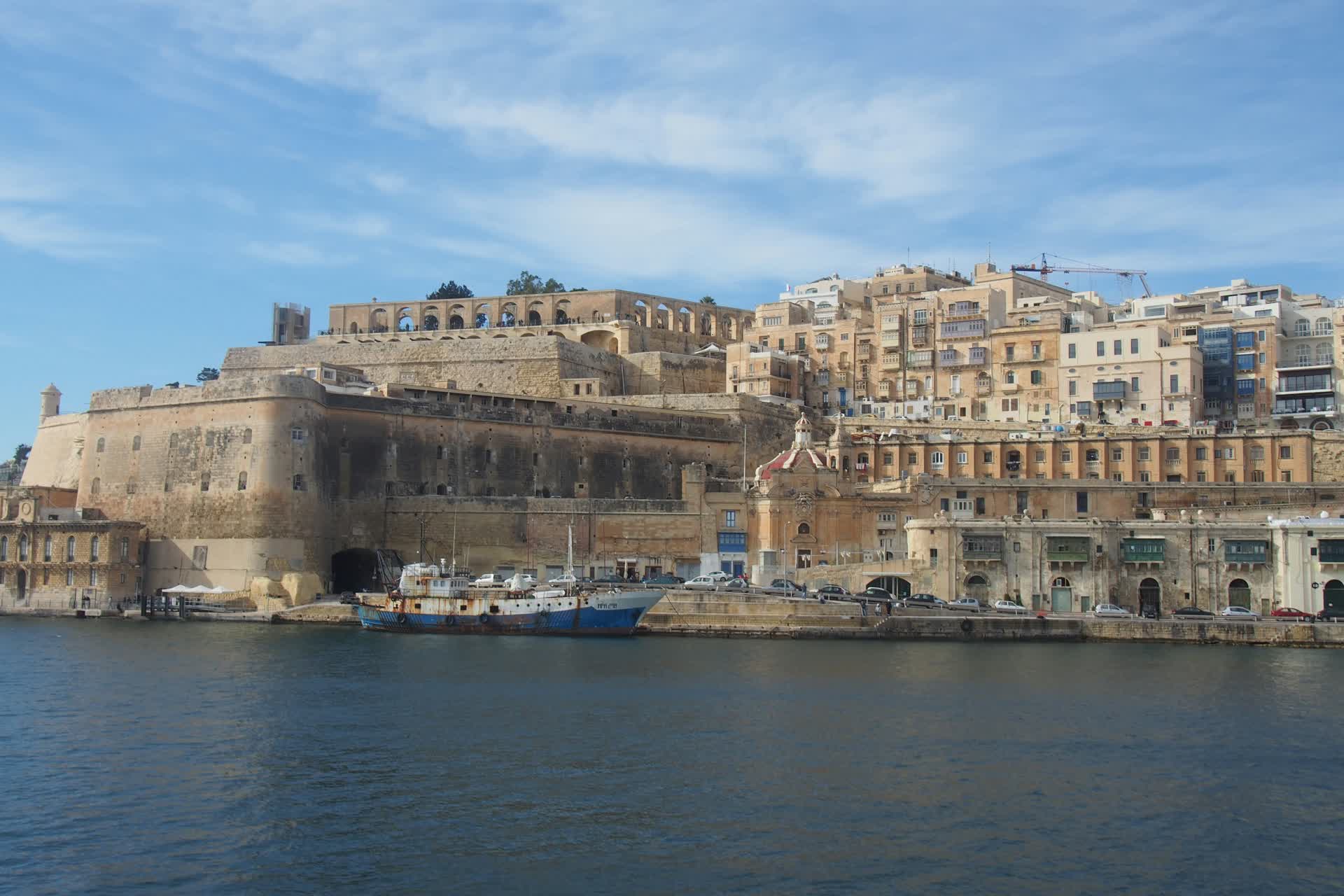
The top places to visit in Malta are Valletta, St. John’s Co-Cathedral, Mdina, Ħaġar Qim and Mnajdra, Ġgantija, the Ħal Saflieni Hypogeum, the Cittadella in Victoria (Gozo), the Blue Lagoon on Comino, Marsaxlokk, and Dingli Cliffs. Malta welcomed a record 3.56 million inbound tourists in 2024, up 19.5% from 2023, per the National Statistics Office.
- Valletta — Founded on 28 March 1566 by Jean Parisot de Valette after his victory in the Great Siege of Malta the year before, the capital was inscribed as a UNESCO World Heritage Site in 1980 and packs 320 monuments into 0.55 square kilometers.
- St. John’s Co-Cathedral — Built from 1573 to 1578 by the Order of St. John to Girolamo Cassar’s design, its oratory houses Caravaggio’s “The Beheading of Saint John the Baptist,” the largest canvas he painted and the only one he signed.
- Mdina — Resettled in 1048 or 1049 by Muslims from Sicily after an Arab siege had left it in ruins, the city earned its nickname the “Silent City” after losing its status as Malta’s capital to Birgu in 1530.
- Ħaġar Qim and Mnajdra — Ħaġar Qim dates to the Ġgantija phase, around 3600 to 3200 BC, while neighboring Mnajdra’s three temples span that same period through the later Tarxien phase (3150–2500 BC); both were added to the Megalithic Temples of Malta UNESCO World Heritage Site in 1992, and Ħaġar Qim’s façade includes a single 57-ton stone standing 5.2 meters high.
- Ġgantija — Dating to roughly 3600–2500 BC and inscribed as a UNESCO World Heritage Site in 1980, the Gozo temples are considered the world’s second-oldest known manmade religious structures after Göbekli Tepe in Turkey.
- Ħal Saflieni Hypogeum — An underground temple complex that may have been used as early as 4000 BC and likely continued in use until around 2500 BC, inscribed as a UNESCO World Heritage Site in 1980, holding the estimated remains of more than 7,000 people.
- The Cittadella, Victoria (Gozo) — First recorded as a castrum in 1241 and devastated by an Ottoman raid in 1551, Gozo’s citadel was rebuilt into a gunpowder fortress between 1599 and 1622 and decommissioned by the British in 1868.
- The Blue Lagoon, Comino — A bay of clear cyan water over a white sandy bottom between Comino and the islet of Cominotto; the same small island’s Saint Mary’s Tower, on its southern coast, was built in 1618 by the Knights of Malta under Grandmaster Wignacourt.
- Marsaxlokk — A traditional fishing village that hosts roughly 70% of Malta’s fishing fleet, known for its colorful luzzu boats and a Sunday market where fishermen sell the day’s catch straight off the quay.
- Dingli Cliffs — The village of Dingli sits on a plateau about 230 meters above sea level, near the highest point in Malta, with views over the uninhabited islet of Filfla.
Planning note
Valletta, St. John’s Co-Cathedral, Mdina, and Dingli Cliffs sit close enough together for day trips from the capital. Ħaġar Qim, Mnajdra, the Hypogeum, and Marsaxlokk cluster in the south for a second easy loop. Gozo’s Cittadella and Ġgantija require the ferry from Ċirkewwa and are best combined into a single day on the island, and Comino’s Blue Lagoon is reached by boat from the same northern harbor, making it easy to pair with a Gozo crossing.
Sources
- Malta Business Weekly — Malta achieves a record-breaking year in Tourism in 2024
- Wikipedia — Valletta
- Wikipedia — St John’s Co-Cathedral
- Wikipedia — Mdina
- Wikipedia — Ħaġar Qim
- Wikipedia — Mnajdra
- Wikipedia — Ġgantija
- Wikipedia — Ħal Saflieni Hypogeum
- Wikipedia — Cittadella, Gozo
- Wikipedia — Comino
- Wikipedia — Marsaxlokk
- Wikipedia — Dingli Cliffs
Read the Top 10 Countries to Visit in 2026 roundup to see how Malta compares globally.