The top places to visit in Mongolia are Gandantegchinlen Monastery in Ulaanbaatar, Gorkhi-Terelj National Park, the Genghis Khan Equestrian Statue, Erdene Zuu Monastery and the Orkhon Valley, Lake Khövsgöl, and the Gobi’s Flaming Cliffs, Khongoryn Els dunes and Yolyn Am gorge. Montsame, Mongolia’s national news agency, reported 617,000 tourist arrivals from 1 January to 10 September 2025.
- Gandantegchinlen Monastery, Ulaanbaatar — Founded in 1809 in the capital’s Bayangol District, this is Mongolia’s main Buddhist centre. Between 1944 and 1989 it was the only monastery in the country that stayed in operation. A statue of Megjid Janraisig, 25.6 metres tall in 1913, was replaced in 1996 by a 26.5-metre one.
- Gorkhi-Terelj National Park — Established in 1993 and covering 292,000 hectares, the park lies about 37 km from Ulaanbaatar to its entrance, with the Terelj settlement around 66 km out. Its best-known rock formations are Turtle Rock (Melkhii Khad) and the Old Man Reading a Book. Brown bears and more than 250 bird species live within its boundaries.
- The Genghis Khan Equestrian Statue — Finished in 2008, this 40-metre stainless-steel horseman stands on a 10-metre visitor centre 54 km east of Ulaanbaatar. An entrance in the horse’s chest leads up through the neck to a lookout in its head. Inside the centre, 36 columns stand for the line of khans from Genghis to Ligdan Khan.
- Erdene Zuu Monastery and the Orkhon Valley — Abtai Sain Khan commissioned Erdene Zuu in 1585, after meeting the 3rd Dalai Lama, in what is now Kharkhorin, Övörkhangai Province. Its wall was meant to carry 108 stupas, a number sacred in Buddhism, though that count was likely never completed. When the monastery was ordered destroyed in 1939, only three small temples and the outer wall with its stupas were spared. UNESCO inscribed the surrounding Orkhon Valley Cultural Landscape in 2004; it also takes in the ruins of the Mongol capital Karakorum.
- Lake Khövsgöl — Close to the Russian border in north-western Mongolia, the lake spans 2,760 km² and is 267 m deep at its deepest point. Wikipedia puts its share of Mongolia’s fresh water at almost 70%. At 1,645 m above sea level, it is covered by ice across its whole surface in winter, and its waters eventually drain into Lake Baikal.
- Flaming Cliffs (Bayanzag), Gobi Desert — This Ömnögovi Province site is best known as the place of the first discovery of dinosaur eggs; Roy Chapman Andrews visited in the 1920s and named it for the red-orange glow of its sandstone cliffs at sunset. Velociraptor, Protoceratops and Oviraptor fossils have been recovered here. Taking fossils from the area requires the appropriate permits.
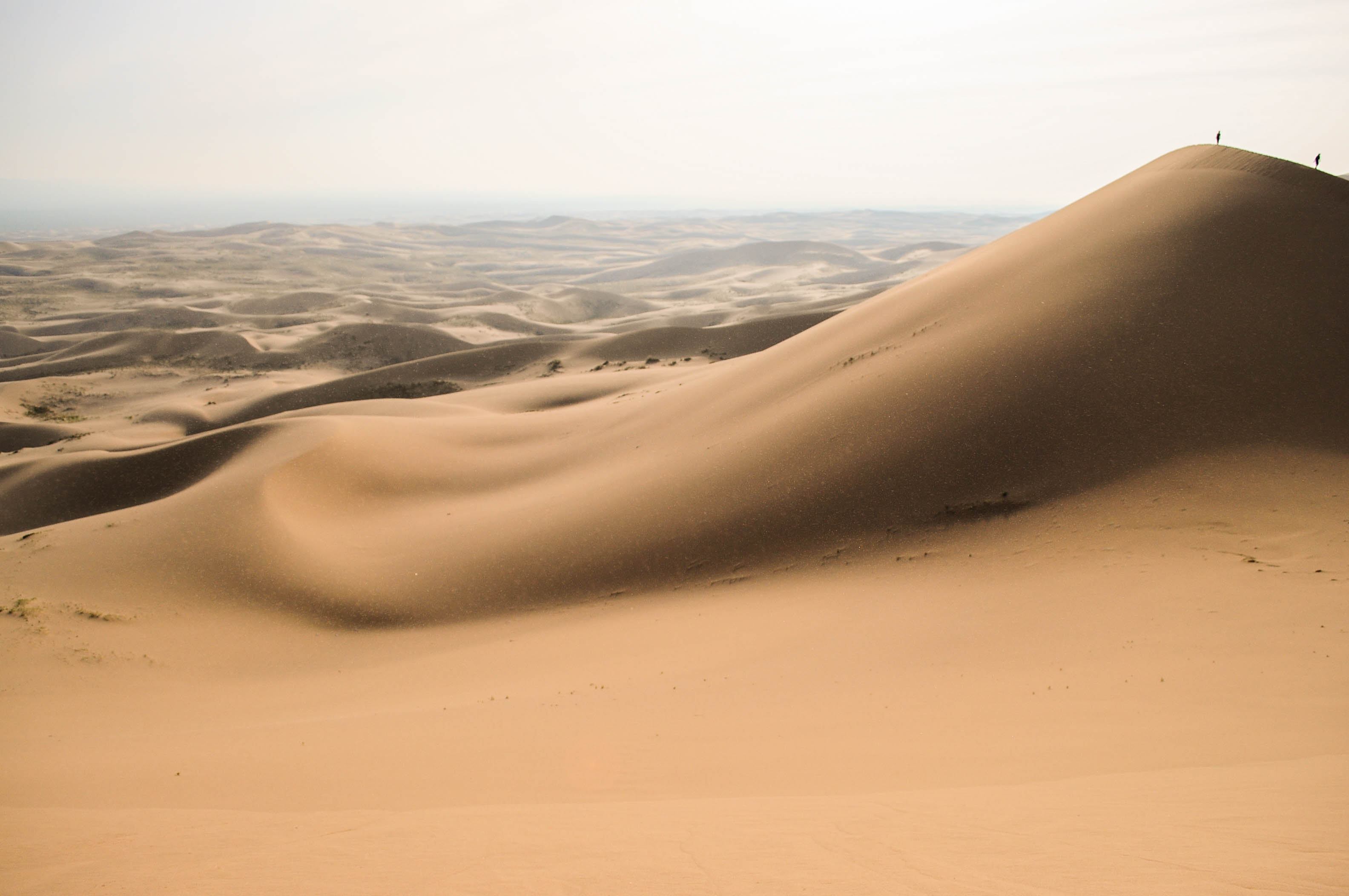
- Khongoryn Els, Gobi Gurvansaikhan National Park — Popularly called the “Singing Sands”, this dune field lies about 180 km from Dalanzadgad. According to Wikipedia, the dunes are typically 80 metres high, with a top height of 300 metres, and the field is 100 to 180 km long. The Khongoryn Gol river on its northern edge feeds pastures where herders graze camels and horses.
- Yolyn Am, Gobi Gurvansaikhan National Park — A deep, narrow gorge in the Gurvan Saikhan Mountains, its name translates as “Lammergeier Valley”. Wikipedia says the gorge’s ice has typically gone by September these days, although in earlier years some of it survived through every season. At its winter peak the ice is several metres deep and stretches for kilometres.
Planning note
Ulaanbaatar, Terelj and the Genghis Khan statue are all within about 70 km of the capital, so they fit together as a short first leg. Erdene Zuu is in Övörkhangai Province, Khövsgöl is in the north-west, and the three Gobi stops are in the south, so each needs its own leg and the country rewards choosing one or two regions. If the Naadam festival is on your list, the national celebration is held in Ulaanbaatar from 11 to 13 July, and UNESCO inscribed it on its Intangible Cultural Heritage list in 2010. Yolyn Am’s ice is a reason to avoid late summer.
Sources
- Montsame — Mongolia Surpasses 617,000 Tourist Arrivals by Mid-September 2025
- Wikipedia — Gandantegchinlen Monastery
- Wikipedia — Gorkhi-Terelj National Park
- Wikipedia — Genghis Khan Equestrian Statue
- Wikipedia — Erdene Zuu Monastery
- Wikipedia — Orkhon Valley Cultural Landscape
- Wikipedia — Lake Khövsgöl
- Wikipedia — Flaming Cliffs
- Wikipedia — Gobi Desert
- Wikipedia — Khongoryn Els
- Wikipedia — Yolyn Am
- Wikipedia — Naadam
Explore more of FarSerene’s destination guides, including the Top 10 Countries to Visit in 2026 roundup, for more 2026 trip inspiration.