Nepal’s top places to visit are Mount Everest, Kathmandu Durbar Square, Pashupatinath Temple, Boudhanath Stupa, Swayambhunath, Bhaktapur Durbar Square, Pokhara and Phewa Lake, Chitwan National Park, the Annapurna Conservation Area, and Lumbini. Nepal welcomed 1,147,567 foreign tourists in 2024, up 13.1% from 1,014,882 in 2023 — about 96% of its pre-pandemic tourism levels — according to Nepal Tourism Board figures.
- Mount Everest — At 8,848.86 meters, Earth’s highest mountain above sea level, first summited on May 29, 1953, by Edmund Hillary and Tenzing Norgay via the Southeast Ridge.
- Kathmandu Durbar Square — One of seven monument zones that together make up the Kathmandu Valley’s UNESCO World Heritage listing, inscribed in 1979 and extended in 2006.
- Pashupatinath Temple — A Hindu temple precinct dedicated to Pashupati, a manifestation of Shiva, with records of its existence dating back to around 400 CE; the site spans 246 hectares and includes more than 500 structures.
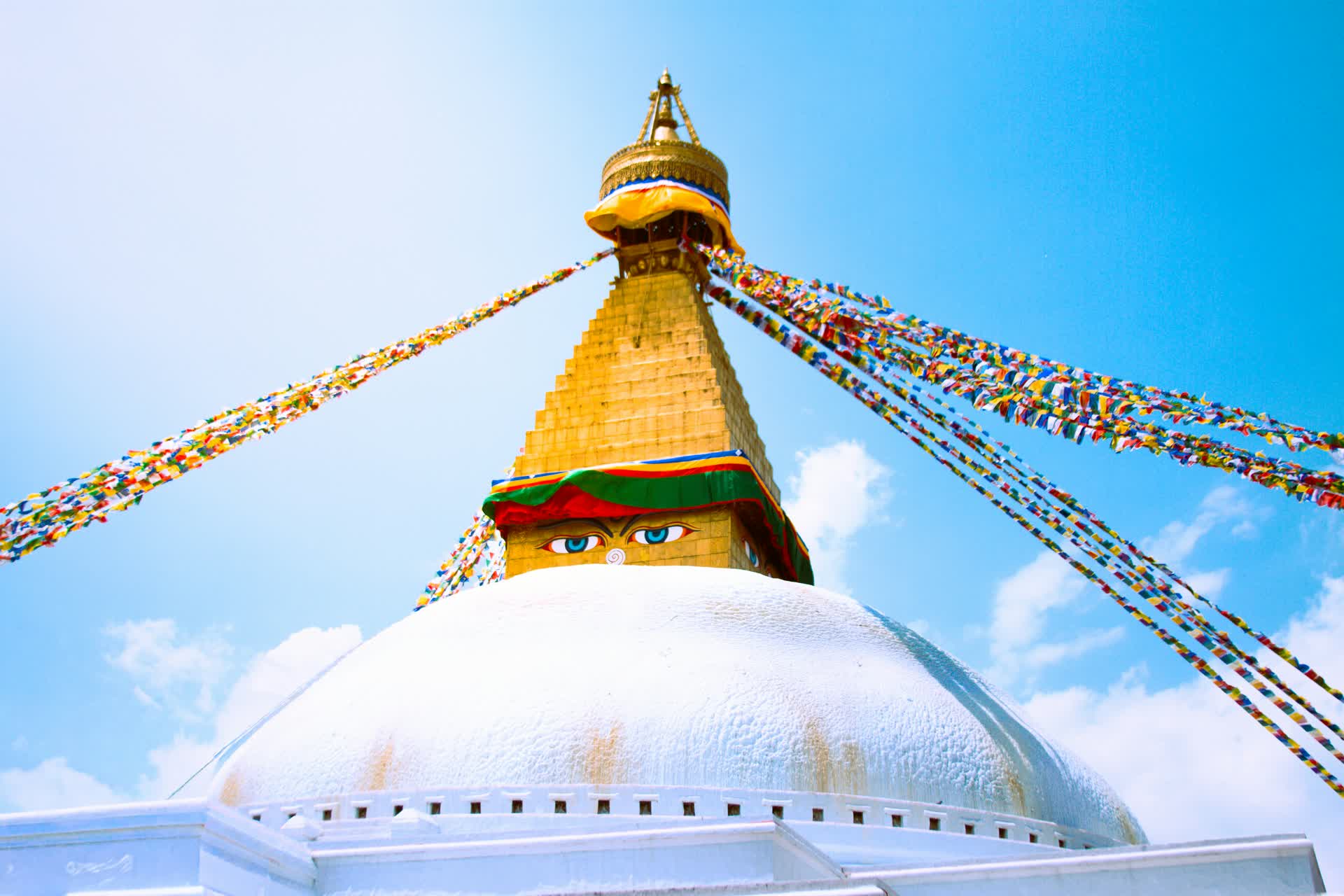
- Boudhanath Stupa — Built mostly in the 14th century (Newar chronicles note an earlier 5th-century predecessor), it stands 36 meters tall as the largest spherical stupa in Nepal and one of the largest in the world.
- Swayambhunath — Known as the “Monkey Temple” for its resident macaque population, reconstructed in 640 CE under King Vṛsadeva with major renovations in the 15th century.
- Bhaktapur Durbar Square — Home to the Palace of Fifty-five Windows, completed in 1708, and the ornately carved Golden Gate, built between 1751 and 1754.
- Pokhara & Phewa Lake — Nepal’s third-largest lake and its most-visited, covering 5.7 square kilometers at 742 meters elevation, known for its reflections of the Annapurna range and Machhapuchhre.
- Chitwan National Park — Established in 1973 and UNESCO World Heritage-listed since 1984, its conservation program has helped bring Nepal’s greater one-horned rhino population back from near-extinction — the park held roughly 605 of the country’s 645 rhinos as of 2015.
- Annapurna Conservation Area — Nepal’s largest protected area at 7,629 square kilometers, formally established in 1992 after conservation efforts began in 1985.
- Lumbini — The birthplace of the Buddha and a UNESCO World Heritage Site since 1997, confirmed by an Ashoka Pillar discovered in 1896 that documents the emperor’s visit in the 3rd century BCE.
Planning note
The Kathmandu Valley’s temples and squares are walkable or a short taxi ride apart, but Everest (via Lukla and the Khumbu region), the Annapurna Conservation Area, Pokhara, Chitwan, and Lumbini are each a separate flight or multi-hour drive away — building in dedicated days (or, for Everest and Annapurna, a multi-day trek) for each region works better than trying to string them into one loop.
Sources
- Travel And Tour World — Nepal’s Tourism Rebounds with 1.1 Million Foreign Tourists in 2024
- Wikipedia — Mount Everest
- Wikipedia — Kathmandu Valley
- Wikipedia — Pashupatinath Temple
- Wikipedia — Boudhanath
- Wikipedia — Swayambhunath
- Wikipedia — Bhaktapur Durbar Square
- Wikipedia — Phewa Lake
- Wikipedia — Chitwan National Park
- Wikipedia — Annapurna Conservation Area
- Wikipedia — Lumbini
Read the Top 10 Countries to Visit in 2026 roundup for how Nepal compares globally.