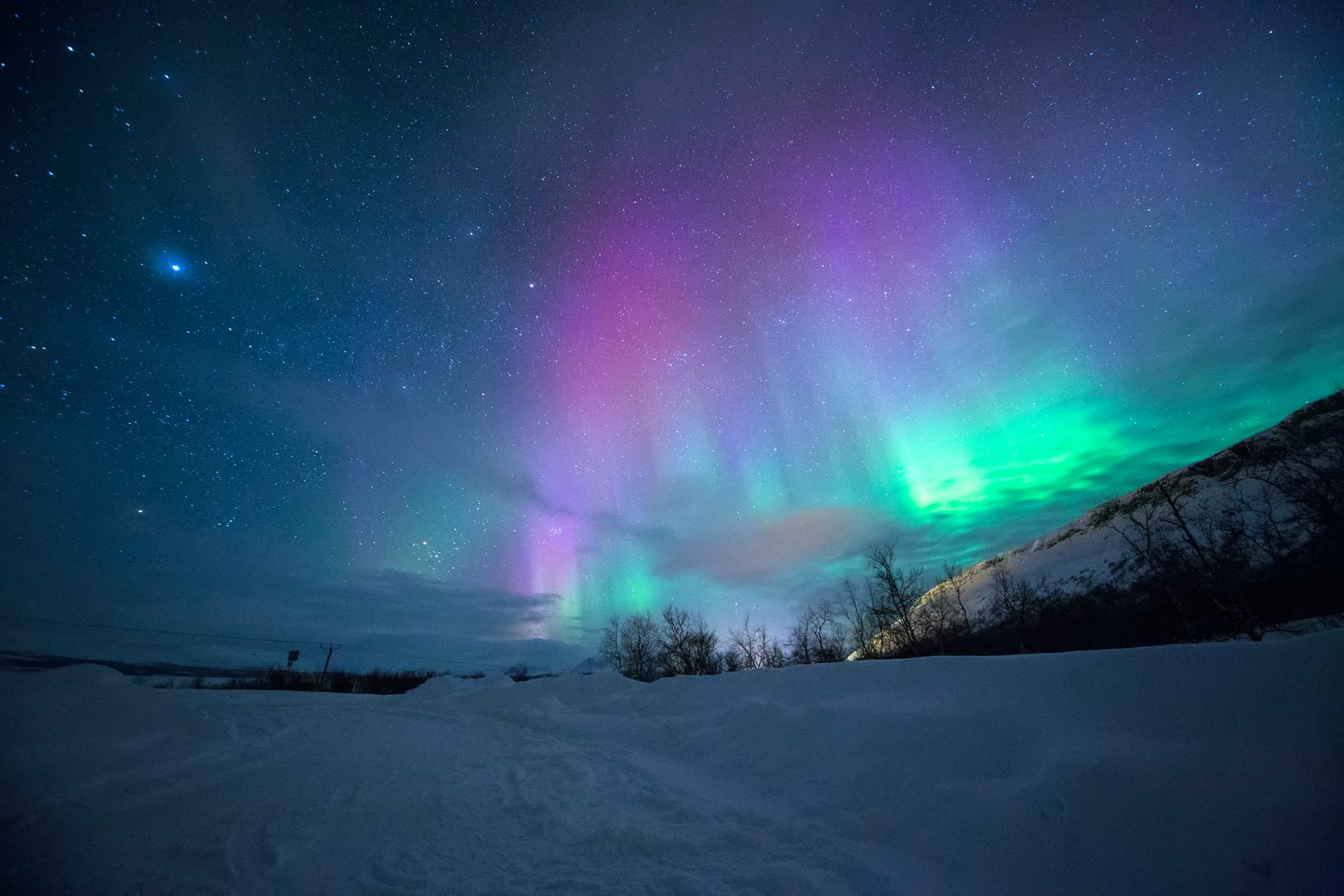
Four destinations whose national tourism boards or travel associations publish aurora seasons are northern Norway (Tromsø, Alta, Lofoten and Senja), Finnish Lapland, Abisko in northern Sweden, and Yellowknife in Canada’s Northwest Territories. The seasons differ by a few weeks: Norway’s runs from late August to late March, Finland’s from late August to early April, and Yellowknife’s from mid-August to early April. As general background, NOAA’s Space Weather Prediction Center says the best place to observe the aurora is under an oval-shaped region between about 60 and 75 degrees latitude.
Seasons by destination
| Destination | Where to base yourself | Season | What the source highlights |
|---|---|---|---|
| Norway | Tromsø, Alta, Lofoten, Senja | Late August – late March | Statistically highest aurora activity: September/October and March/April |
| Finland | Lapland and Arctic Lakeland | Late August – early April | Peak months: September–October and February–March |
| Sweden | Abisko | Not given | Best time for northern Sweden generally: mid-November – mid-March |
| Canada | Yellowknife, Northwest Territories | Mid-August – early April | Prime windows: mid-August – late September, and mid-November – early April |
Destination notes
- Northern Norway — Visit Norway says you can see the aurora from as early as late August until late March, and that statistically, spring (March/April) and autumn (September/October) have the highest levels of aurora activity; note that its stated season ends in late March, so April falls after it. Places it names include Tromsø, which it says has become very busy in the winter months, as well as Alta, the Lofoten Islands, Bodø and the Salten region, Vesterålen, Lyngen, Senja and Svalbard. Visit Norway adds that in Norway, peak time is often between 11pm and 2am.
- Finnish Lapland — Visit Finland puts the season at late August to early April in Lapland and Arctic Lakeland, and lists September–October and February–March as its peak months. It says the most active seasons are autumn and spring, that statistically the lights are visible on every second clear night during these periods, and, separately, that October and November are statistically among the strongest months for aurora activity.
- Abisko, Sweden — The Swedish Tourist Association, a non-profit membership organisation, says that in northern Sweden generally the best time to see the northern lights is from mid-November to mid-March. It adds that Abisko is often called “the blue hole” because its sky is frequently clear when the surrounding area is cloudy. Its Aurora Sky Station sits on Mount Njullá in Abisko National Park and is reached by chairlift.
- Yellowknife, Canada — Destination Canada says Yellowknife, at 62.45°N, sits directly beneath the auroral oval and averages 240 nights of aurora a year. Its viewing season runs from mid-August to early April, with two prime windows: mid-August to late September, and mid-November through early April. It recommends avoiding early October to mid-November, when heavy cloud cover moves in and some operators reduce or pause their aurora programming.
When to go
What every destination needs is the same: NOAA notes that the sky has to be dark and free of clouds, and that the midnight sun rules out aurora viewing in summer at these latitudes. The season dates above are the ranges each source gives; within them, the weather decides whether a given night works.
If you are going in autumn, Visit Norway names September/October as one of its two highest-activity periods, and Visit Finland lists September–October among its peak months and calls October and November statistically among the strongest months. Yellowknife is the exception: its fall window runs only to late September, and Destination Canada advises against early October to mid-November there because of heavy cloud cover.
If you are going over Christmas and New Year, all four seasons in the table cover it. It also falls inside the Swedish Tourist Association’s mid-November to mid-March window and Yellowknife’s mid-November to early April prime window, though neither Visit Norway nor Visit Finland lists December among its peak periods.
If you are going in late winter, February–March is one of Visit Finland’s peak periods, and Destination Canada says February until the end of March has some of the best winter aurora viewing conditions of the season in Yellowknife, calling it a prime window for first-time travellers and returning visitors alike.
Whichever you choose, allow several nights. No source here promises a sighting on a given night; clear skies are the variable you cannot plan around, so a longer stay gives you more chances.
For the rest of each trip, see our guides to the top places to visit in Norway, Finland, Sweden, Canada and Iceland, or read the Top 10 Countries to Visit in 2026 roundup.