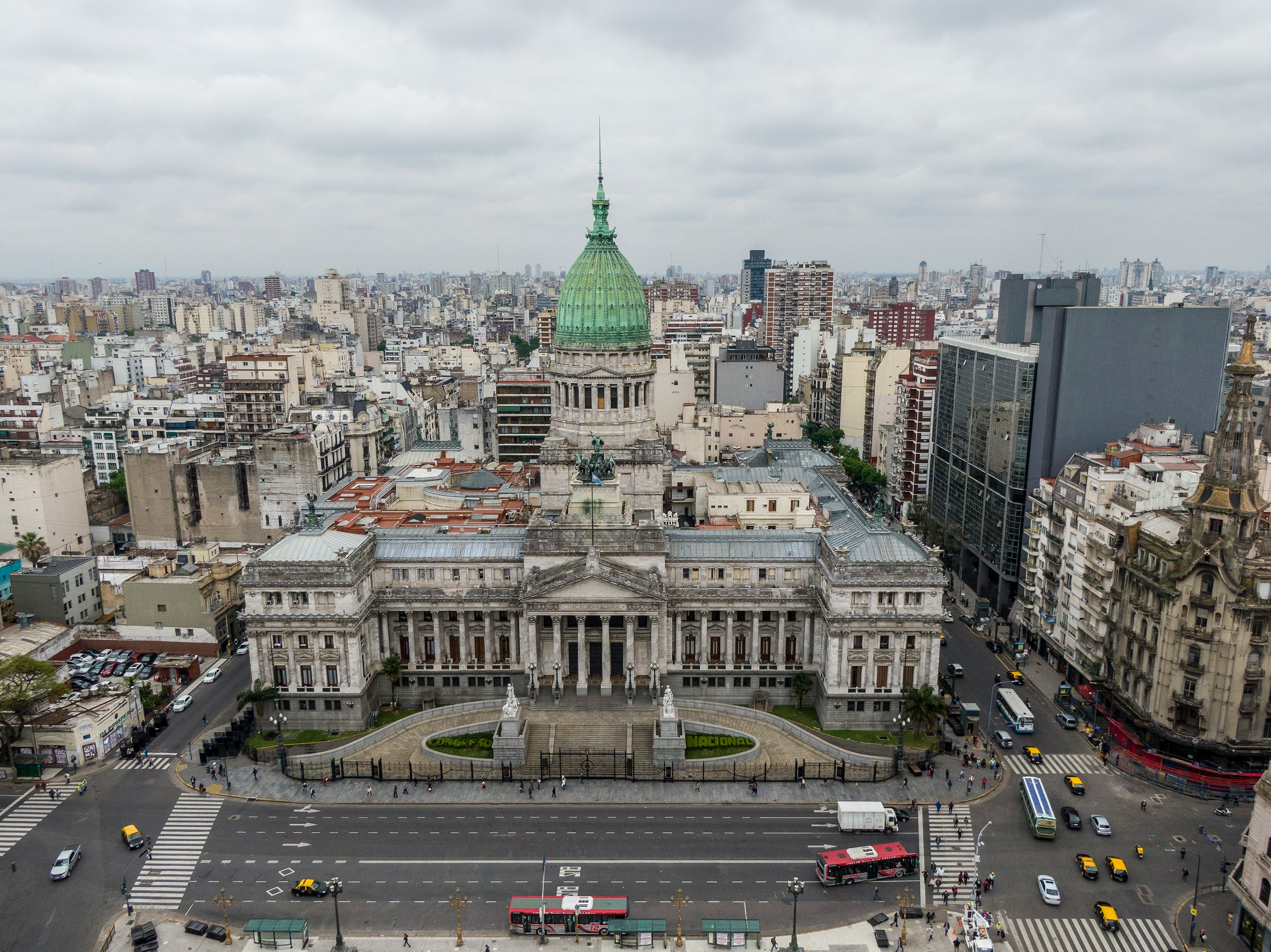
Buenos Aires opened South America’s first underground railway on December 1, 1913 — a line connecting Plaza de Mayo and Plaza Miserere that made the city the 13th in the world, and the first in the Southern Hemisphere and the Spanish-speaking world, to run a metro. That century-plus infrastructure head start still shapes how the city works today, and it’s a better starting point for planning a trip than another rundown of tango bars. Here’s the orientation layer: where to stay, how the Subte and streets actually move you around, and which landmarks carry a real, checkable story.
Where to base yourself
Recoleta is the standard first-timer recommendation: elegant, tree-lined, close to downtown, and walkable to most major sights, with a reputation as one of the safest and most family-friendly parts of the city. Palermo, split into the trendier Palermo Soho and Palermo Hollywood sub-districts, is where the majority of international visitors actually end up staying — the center of the city’s nightlife, dining, and boutique shopping, roughly 15–20 minutes by car from Recoleta. San Telmo, the oldest neighborhood in the city, offers cobblestone streets, colonial buildings, and a well-known Sunday antiques market, but travel guides consistently flag it as grittier at the edges and best approached with more street awareness after dark than Recoleta or Palermo require. Recoleta, the Microcentro, San Telmo, and Puerto Madero are all within walking distance of one another, which makes a Recoleta or Microcentro base a reasonable way to cover the historic core on foot before taking transit out to Palermo for evenings.
Getting there
Aeroparque Jorge Newbery (AEP), just 4.8 km from downtown, handles most domestic and regional flights and is the more convenient arrival point if your trip starts within Argentina. Ezeiza International Airport – Ministro Pistarini (EZE), 27.6 km out, is the primary hub for long-haul international arrivals; budget at least 45–60 minutes for the transfer into the city depending on traffic.
Getting around
The Subte — officially the Buenos Aires Underground — has grown from that single 1913 line into a six-line, 90-station network covering 56.7 km, nationalized in 1939 after starting as three separately built private lines. One quirk worth knowing before you plan a day: Line A’s original 1913 rolling stock, built by the Belgian firm La Brugeoise, stayed in service for exactly one hundred years before retirement in 2013. Recoleta, San Telmo, and the Microcentro are compact enough to cover mostly on foot; Palermo’s sprawl and distance from the historic core make it the one neighborhood where relying on the Subte or a taxi, rather than walking between areas, actually saves meaningful time.
What’s actually worth your time
- Torre Monumental — Completed in 1916 as a gift from the city’s British community for the centennial of the 1810 May Revolution, the 60-meter clock tower’s bells, cast by Gillett & Johnston of Croydon, play the same Westminster Quarters melody as Big Ben; it was renamed from Torre de los Ingleses after the 1982 Falklands War.
- Cabildo of Buenos Aires — The current building’s construction began in 1725 on the site of the city’s original 1608 town hall; it was the literal meeting place of the 1810 May Revolution that Argentina’s national holiday commemorates, and now houses the Museo Nacional del Cabildo.
- Basilica of Our Lady of the Pillar — Completed in 1732 by Jesuit architects Andrés Blanqui and Juan Bautista Prímoli, this is the second-oldest church in Buenos Aires and gave the surrounding Recoleta neighborhood its name, after the Recollect friars who once occupied the adjoining monastery.
- Parque Tres de Febrero (Bosques de Palermo) — Opened November 11, 1875, under President Nicolás Avellaneda on land confiscated from ousted governor Juan Manuel de Rosas; landscape architect Charles Thays expanded the grounds between 1892 and 1913, and the rose garden today holds more than 8,000 roses across 93 species.
- Bernardino Rivadavia Natural Sciences Museum — Decreed into existence on August 7, 1812 by statesman Bernardino Rivadavia, making it the first natural history museum founded in South America; it now holds roughly 2 million specimens and publishes Anales, one of Argentina’s oldest continuously running scientific journals, since 1864.
- Lezama Park — Traditionally associated with conquistador Pedro de Mendoza’s failed 1536 landing and Buenos Aires’ first, short-lived founding, though modern archaeology hasn’t confirmed the exact site; the land itself became a public park in 1894 after owner José Gregorio Lezama’s widow sold it to the city on condition it carry his name.
Planning note
AEP’s proximity to downtown makes it worth checking whether your connecting flight can route through Aeroparque instead of Ezeiza — it can save an hour of transfer time each way on a short trip. If San Telmo’s Sunday market (Feria de San Telmo) is on your list, plan it as a daytime visit; the same streets that draw crowds by day are quieter, and better avoided alone, once vendors pack up.
Sources
- The Inauguration of a Pioneering Transit System in Argentina — Transportation History
- Buenos Aires Underground — Wikipedia
- Where to Stay in Buenos Aires - A Local’s 5 Favorite Areas — Go Ask A Local
- Torre Monumental — Wikipedia
- The Cabildo — Official English Website for the City of Buenos Aires
- Basilica of Our Lady of the Pillar, Buenos Aires — Wikipedia
- Parque Tres de Febrero — Wikipedia
- Bernardino Rivadavia Natural Sciences Argentine Museum — Wikipedia
- Lezama Park — Wikipedia
Read the Top Places to Visit in Argentina roundup for how Buenos Aires fits into a wider trip.