Mexico City’s Benito Juárez International Airport logged 4,279,991 international arrivals in 2023, up from 2.68 million in 2021, per Statista’s tracking of Mexican tourism data — a recovery that pushed the capital’s hotel sector to a record number of foreign guests that same year. Most of that traffic lands, checks into a neighborhood picked from a blog post, and then spends half its trip stuck in traffic figuring out how the city actually fits together. This is the logistics rundown: where to sleep, how the Metro and streets work, and which of the capital’s landmarks reward the time they ask for.
Where to base yourself
Roma Norte is the default first-timer pick for a reason: centrally located, walkable, dense with restaurants and cafés, and close to Metro and Ecobici bike-share access. Lonely Planet’s local guide to the area notes Roma was founded in 1903 and drew Mexico City’s bourgeoisie for its then-novel running water and street lighting, laid out along Parisian-style boulevards that still define the neighborhood’s grid today. La Condesa, its quieter neighbor, trades a bit of that density for two large parks (Parque México and Parque España) and a slower, more residential pace — a better fit for longer stays or families. Polanco is the upscale option: high-end shopping, calmer streets, and the closest of the three to Chapultepec Park’s museum cluster. Multiple travel guides, including Lonely Planet’s coverage, identify these three — Roma Norte, Condesa, and Polanco — as the areas with the most consistent tourist safety record in the city; note that even from a central base, a taxi to Polanco or Centro Histórico still runs roughly 35 minutes.
Getting there
The primary gateway is Mexico City International Airport (MEX), 6.6 km from the city center. Two secondary airports handle overflow and budget carriers: Felipe Ángeles International Airport (NLU), 35.5 km out, and Adolfo López Mateos International Airport (TLC) in Toluca, 47 km out — both worth checking for cheaper fares if you don’t mind a longer transfer into the city.
Getting around
The Sistema de Transporte Colectivo (STC) Metro opened its first line on September 4, 1969, running between Zaragoza and Insurgentes stations. It has grown into the second-largest rapid transit system in North America after the New York City Subway: 12 lines, 195 stations, and just over 200 km of track, with most lines running on rubber tires — a technology adopted specifically because the city’s soft lakebed soil doesn’t hold conventional steel-wheel systems well. Roma Norte, Condesa, and Polanco are all walkable neighborhoods in their own right, and the Ecobici bike-share network’s 7-day visitor plans are a realistic way to cover them without a car; Centro Histórico, by contrast, is dense enough to walk end-to-end but far enough from the southern neighborhoods that most visitors treat it as a dedicated day trip rather than a walk-over.
What’s actually worth your time
- National Museum of Anthropology — Opened September 17, 1964, in Chapultepec Park, designed by architect Pedro Ramírez Vázquez with a 70,000-square-meter footprint; its central courtyard, topped by a single-pillar concrete canopy known as “el paraguas,” was directly inspired by the neoclassical rotunda at Washington’s National Gallery of Art.
- Templo Mayor — Rediscovered by accident on February 21, 1978, when power company workers digging near República de Argentina and República de Guatemala streets struck the carved Coyolxāuhqui Stone; the find triggered the Templo Mayor Project, one of the largest urban archaeological excavations in the Americas, led by Eduardo Matos Moctezuma.
- Chapultepec Castle — Commissioned in 1785 by colonial viceroy Bernardo de Gálvez, it’s the only structure in the Americas to have served as the residence of a sovereign, after Emperor Maximilian I and Empress Carlota made it their imperial home from 1864 to 1867; it became the National Museum of History in 1940 under President Lázaro Cárdenas.
- Luis Barragán House and Studio — Built in 1948 in the Daniel Garza neighborhood, this 1,161-square-meter concrete building was architect Luis Barragán’s home until his 1988 death and was UNESCO World Heritage-listed in 2004 for its influence on modern landscape and garden design; tours run by appointment only.
- Angel of Independence — Completed in 1910 for the centennial of Mexico’s War of Independence, the 36-meter column was designed by Antonio Rivas Mercado and crowned by a gilded Victory statue sculpted by Italian artist Enrique Alciati; the remains of independence-movement figures, including Miguel Hidalgo, are interred in its base.
- Basilica of Our Lady of Guadalupe — One of the most-visited pilgrimage sites on earth, drawing over 20 million visitors annually according to Catholic News Agency reporting on shrine attendance, with roughly half arriving in the days around the December 12 feast day alone.
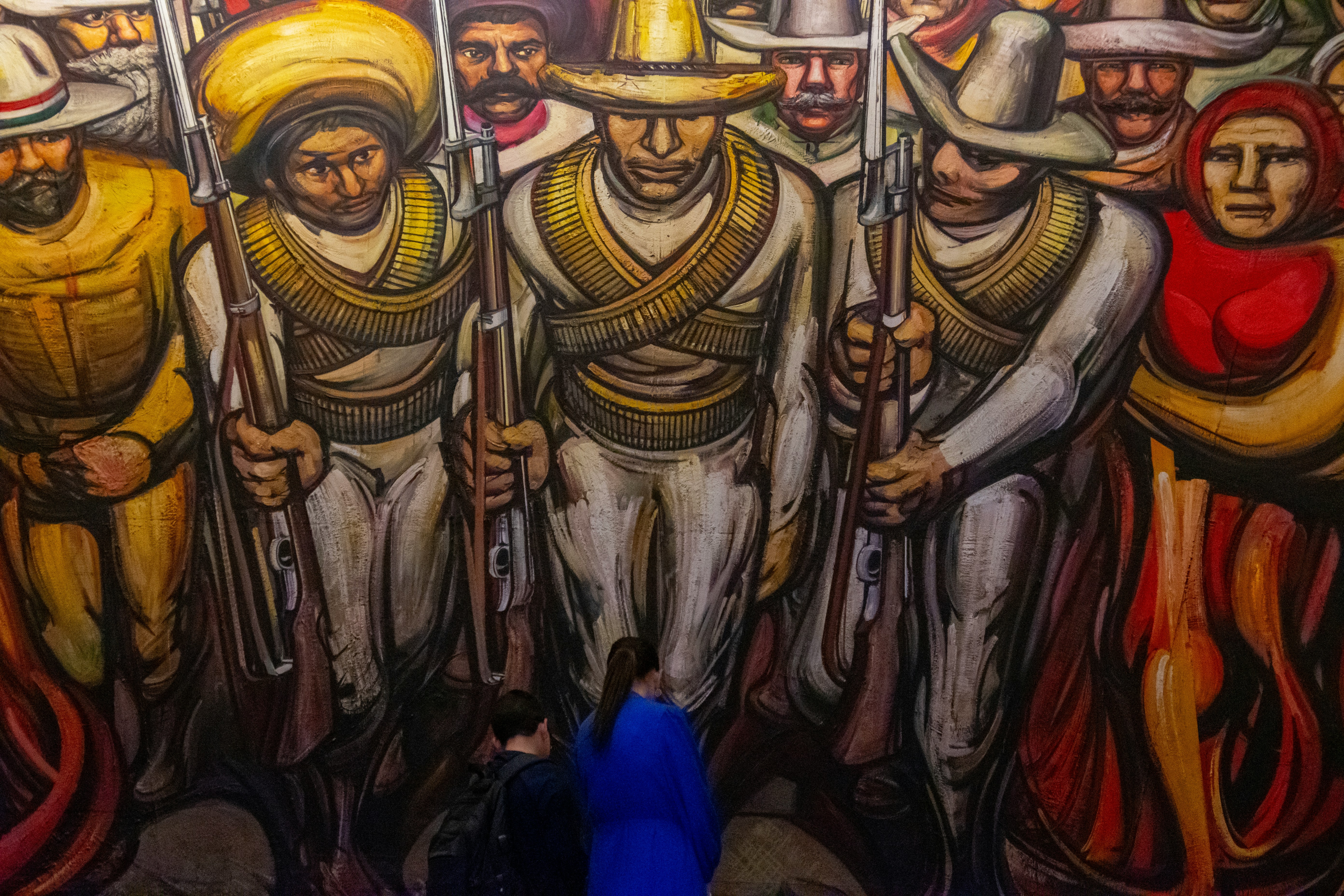
- National Palace — Seat of Mexico’s federal executive since colonial times, standing on the site of Moctezuma II’s own palace and home to Diego Rivera’s mural cycle depicting Mexican history along its main staircase.
Day trips
Teotihuacan, the pre-Aztec pyramid complex about an hour northeast of the city, is a logistics decision, not a content one — the country-wide Mexico guide already covers its history, so treat it here purely as scheduling: it’s a half-day trip by tour bus or car, best started early to beat both the crowds and the midday sun on the shadeless Avenue of the Dead.
Planning note
Mexico City sits at over 2,200 meters of elevation, which catches visitors flying in from sea level off guard for the first day or two — pace your first full day accordingly, especially before a Teotihuacan climb. Traffic between Zona Sur neighborhoods and Centro Histórico can run long at peak hours regardless of distance, so building Metro or Metrobús legs into your day, rather than defaulting to rideshares, is usually the faster call.
Sources
- Number of international tourists Mexico City — Statista
- Local’s guide to Roma and Condesa in Mexico City — Lonely Planet
- Mexico City Metro — Wikipedia
- National Museum of Anthropology (Mexico) — Wikipedia
- Discovering the Templo Mayor 1978 — Medium/Lessons from History
- Coyolxauhqui Stone — Wikipedia
- Chapultepec Castle history — Castlespedia
- Luis Barragán House and Studio — UNESCO World Heritage Centre
- Angel of Independence — Wikipedia
- Historic 12.5 million pilgrims visit Our Lady of Guadalupe Shrine — Catholic News Agency
Read the Top Places to Visit in Mexico roundup for how Mexico City fits into a wider trip.