Seven nights in Italy is enough for two bases. Ten nights is enough for three. Fourteen is the first length at which “slow travel” describes what you actually do rather than what you intended. Anything shorter than seven nights is a city break with an Italian address, which is a fine trip — just not the one most people are picturing when they ask this question.
The number that matters is nights, not days. And the constraint that decides your answer is not distance. Italy’s high-speed rail has already solved distance. What eats a short Italian trip is hotel changes and entry times you booked a month ago.
The short answer, by trip length
| Nights | What it realistically buys | Shape that works |
|---|---|---|
| 5–6 | One base, one half-day trip | Rome, or Florence with a Siena day |
| 7 | Two bases | Rome + Florence, or Florence + Venice |
| 10 | Three bases, or two plus a real regional contrast | Rome + Florence + Venice, or Rome + the Amalfi Coast |
| 14 | Three bases with slack, or two plus a genuinely slow third | A classic spine plus one week that isn’t scheduled |
Those are nights on the ground, not the number printed on your flight confirmation.
Count nights, not days
A “10-day trip” from most of North America is realistically eight usable days. You land mid-morning at best, jet-lagged, and the afternoon goes to a shower and a walk. Your departure day usually starts with a 3am alarm or ends at an airport by noon. That’s roughly one and a half days gone before you plan anything.
Then subtract transfer days. Every hotel change costs you a morning: checkout, bags, station, platform, arrival, check-in, reorientation. The train might be ninety minutes. The day is not ninety minutes.
This is why the jump from seven to ten nights feels larger than three days. Seven nights with two bases gives you one transfer. Seven nights with three bases gives you two transfers out of seven — nearly a third of the trip spent relocating.
Rail speed is not your constraint
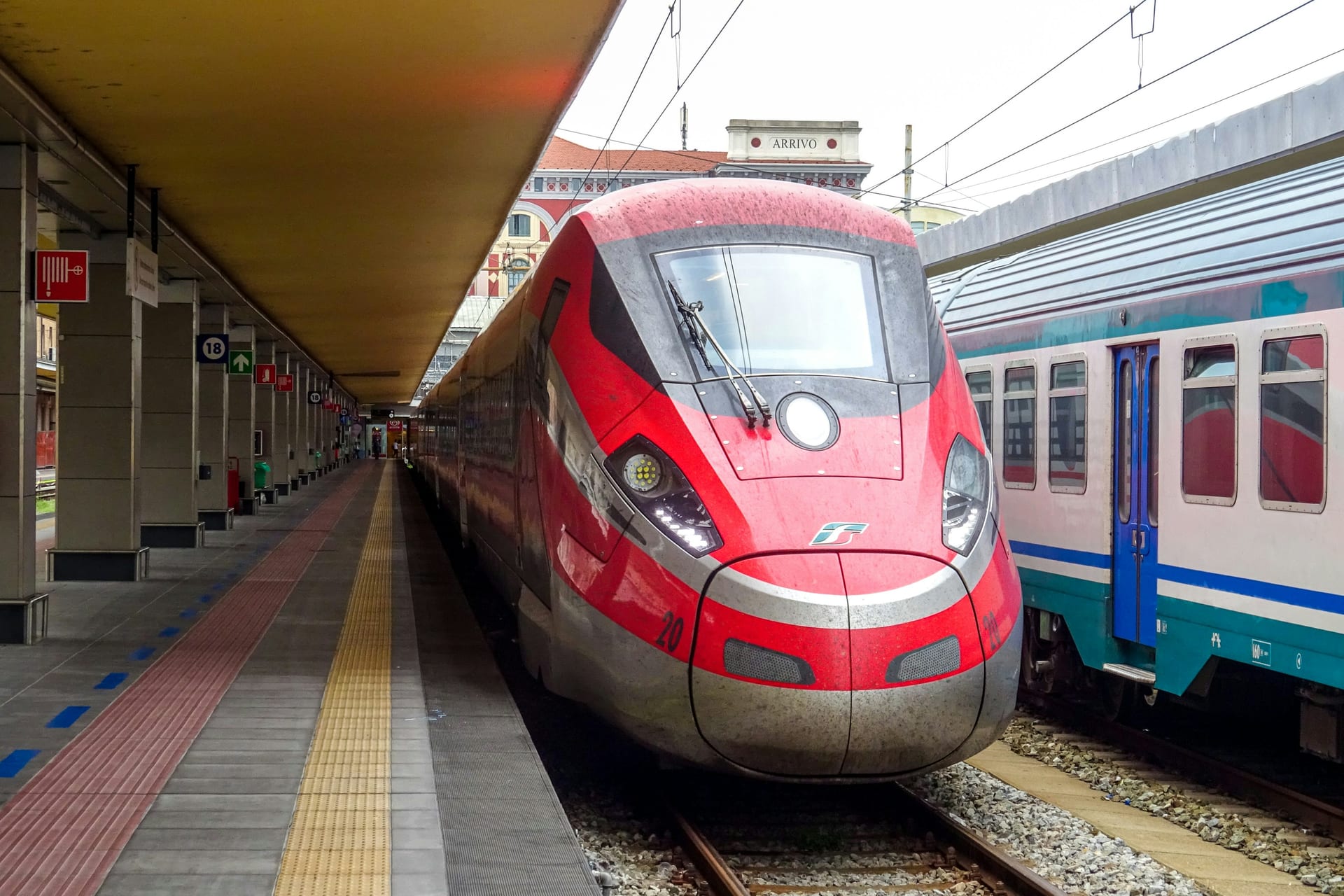
Italy’s high-speed network is genuinely fast. Per Seat 61’s Frecciarossa route data, Rome to Florence runs 1h23 on the fastest services and Rome to Venice 3h45; the Florence–Venice leg sits at roughly two hours in between. Trenitalia’s own timings vary by service — limited-stop trains hit those figures, and trains with more intermediate stops take meaningfully longer, so check the timetable for your actual date rather than the headline number.
Here’s the trap that fast rail sets. Because Rome to Florence is under ninety minutes, a fourth and fifth city look free on a map. They aren’t. The train is cheap in time; the hotel change is not. A route with four bases in ten nights is not a slower version of a three-base route — it’s a different trip, one where you are a person who packs a lot.
Our 7-day Italy itinerary is built around exactly this constraint: fewer hotel changes, one realistic Rome-to-Florence rhythm, rather than a maximum-cities route.
Timed entry has already booked part of your trip
This is the part most day-count advice skips, and it changes the arithmetic.
Entry to the Colosseum requires a compulsory reserved time slot. Per the Parco Archeologico del Colosseo, tickets go on sale 30 days before the visit date through the official channel at ticketing.colosseo.it, entry slots are spaced at short intervals, and tickets are issued in the holder’s name — you need matching ID at the gate. Miss your slot and you don’t get in. The standard ticket also covers one entry to the Roman Forum and Palatine within 24 hours either side of your Colosseum time, which is useful sequencing information: those two visits want to sit next to each other.
Florence works differently. The Uffizi Galleries use timed entry windows through their official ticketing partner, with a per-person booking fee, but the on-site ticket office keeps selling even when online slots are gone. Booking ahead is strongly advised on busy days rather than mandatory.
So: one of your Rome mornings is fixed 30 days out, and the Forum wants to be adjacent to it. One of your Florence mornings is semi-fixed. On a seven-night trip, that’s two of your roughly five and a half usable days already shaped by someone else’s calendar. Plan the rest of the trip around those anchors instead of discovering the conflict in week three.
Seven nights: pick two, commit
Rome and Florence, or Florence and Venice. Not all three.
Rome deserves three full days on its own — the Rome logistics guide covers why the CBD-equivalent sights cluster in a way that rewards a proper base rather than a sprint. Give Florence three, and you have one transfer and a trip that doesn’t feel like an errand.
The version that disappoints people is Rome–Florence–Venice in seven nights. On paper it’s the classic spine. In practice it’s two transfer mornings, roughly two usable days per city, and a Venice arrival on the day you’re most tired.
Ten nights: the spine works, or trade a city for a contrast
Ten nights is where Rome–Florence–Venice becomes a good trip rather than a forced march. Three bases, two transfers, three full days each with the arrival and departure losses absorbed.
The alternative is more interesting for a lot of travellers: two cities plus one regional contrast. Rome and the Amalfi Coast, for instance, where the second half is deliberately slower and based in one place. Our Rome and the Amalfi Coast, 8 Days route uses the Pompeii stop as the transition and bases in Sorrento so the coastal day trips don’t each cost a repack. The cost figures on that page are illustrative per-person estimates, not live supplier pricing — treat them as a planning baseline, not a quote.
Choosing between the art-city spine and a city-plus-region shape is the real decision at this length, and it’s the framework our Italy destination guide is organised around.
Fourteen nights: the only length where slow is real
At fourteen nights you can keep three bases and stop optimising. Four or five nights per stop means a day with nothing booked, which is where most people’s actual memories of Italy come from.
The other fourteen-night shape worth considering: two cities plus one week somewhere rural — Tuscany, Umbria, Puglia — where the point is that you stop moving. That week does not survive being cut to four nights. If you’re going to compress it, take the ten-night version instead and do the slow trip properly another time.
What can change the answer
Season. Southern Italy in a July or August heat wave shortens every usable day — you lose the middle of the afternoon whether you planned to or not. Shoulder season buys back hours, which is effectively buying back days. Our shoulder-season planning guide covers the trade-off against reduced seasonal services.
Venice specifically. Venice has been running a day-visitor access fee on selected dates. In 2026 it applied on 60 dates between 3 April and 26 July, from 8:30 to 16:00, at €5 booked four or more days ahead and €10 for later bookings, for day-trippers aged 14 and over; overnight guests in registered Venice accommodation were exempt because they already pay the overnight tourist tax. That trial ended on 26 July 2026 and, as of September 2026, no 2027 calendar had been confirmed — check the city’s official portal at cda.ve.it for the current year before you assume either way. Practically, this is a mild argument for sleeping in Venice rather than day-tripping into it, which also happens to be the better trip.
Who you’re travelling with. Children and anyone with mobility constraints shift the maths toward fewer bases, not shorter days. A ten-night two-base trip usually beats a ten-night three-base trip for a family.
The version of this question worth asking
“How many days do I need in Italy” has no universal answer because the real question underneath it is how many hotel changes you’re willing to absorb. Decide that first — one, two, or three — and the night count falls out of it.
If you’d rather see the arithmetic than do it, run the route through the planner: it counts nights, transfer time, and estimated cost per variant so you can compare a three-base and a two-base version of the same dates side by side.
Related reading: Italy vs France for First Timers, Top Places to Visit in Italy, and the short-form answer at How many days do first-time visitors need in Italy or France?.
Sources
- Seat 61 — Frecciarossa routes and journey times
- Trenitalia — Frecciarossa service information
- Parco Archeologico del Colosseo — Opening times and tickets
- Uffizi Galleries — Tickets and booking
- Comune di Venezia — Contributo di accesso (access fee) portal
Rail times and ticketing rules were checked in September 2026. Timetables, fares and access-fee calendars change; verify against the official sources above for your travel dates.