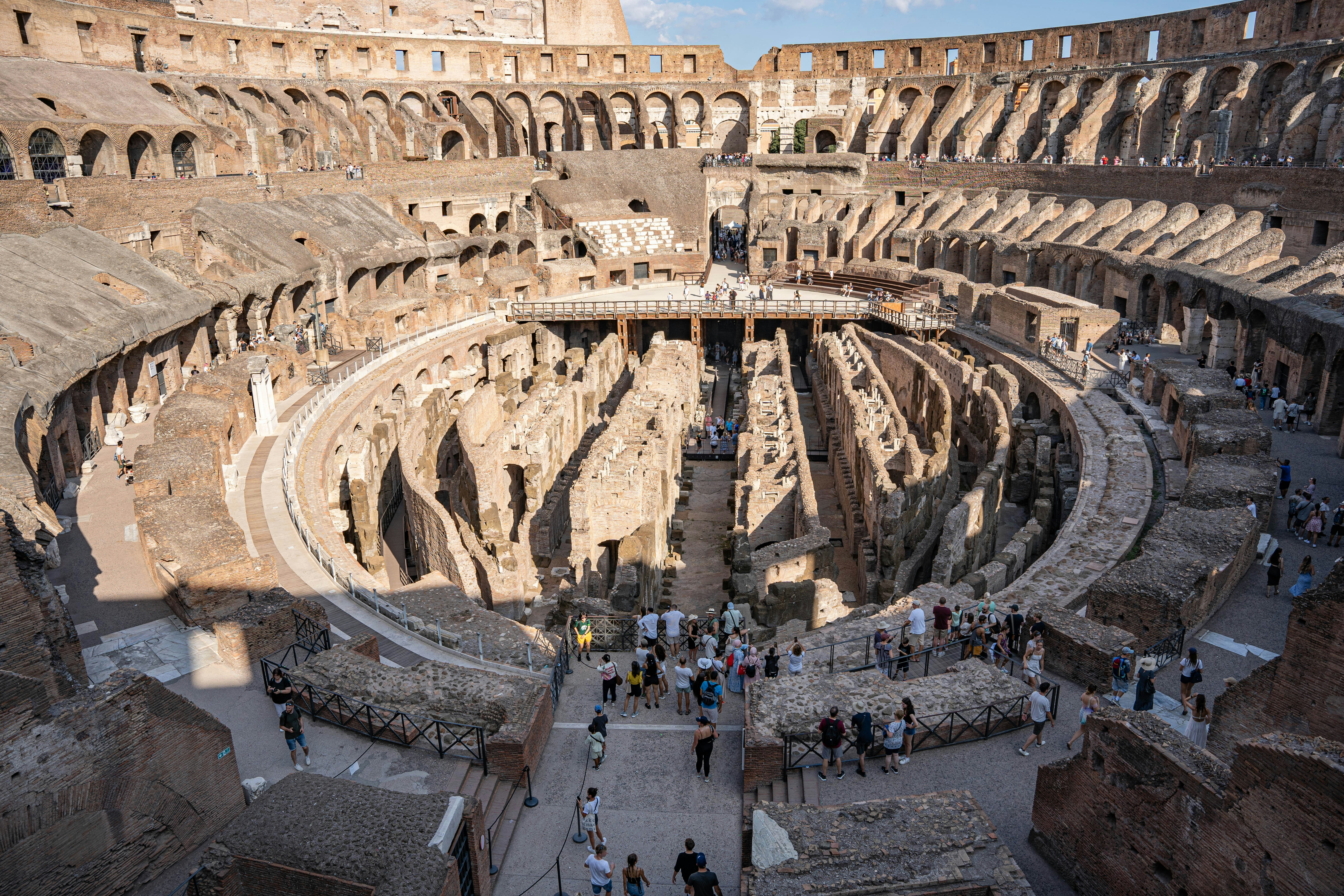
Short answer first, since it’s the question that brings most people to this page: yes, book Colosseum tickets in advance if you can, and book them only on ticketing.colosseo.it — the official ticketing portal run by the Parco Archeologico del Colosseo, the Italian state body that manages the Colosseum, Roman Forum, and Palatine Hill; Go Ask a Local’s guide to ticket tiers confirms ticketing.colosseo.it by name as “the official Colosseum website,” operated under the Parco Archeologico del Colosseo. Several similarly named commercial sites also rank for searches like “official Colosseum tickets” and are not the park’s own site; travel outlet Explore has reported on tourists fooled by sites designed to look official, in some cases losing money with no way to reach anyone for a refund — check that the address reads ticketing.colosseo.it before entering payment details. Standard 24-hour tickets are released 30 days before the visit date and, per Roaming Historian’s guide to the process, are comparatively easy to find — it’s the underground and arena-floor tickets that are far more limited and often sell out almost immediately once released. Beyond that initial 30-day release, Go Ask a Local’s breakdown of ticket tiers notes a general secondary release that opens about seven days before each visit date, giving anyone who missed the first window — across ticket types, not just arena-floor — another shot at availability. An onsite ticket office remains an option for visitors who didn’t book ahead, but per Go Ask a Local and Roaming Historian, queues can run long with no guarantee anything is left — a fallback, not a substitute for booking ahead. The rest of this guide covers what surrounds that decision: where to stay, how to get in from either airport, and why Rome’s metro won’t get you everywhere you want to go.
Where to base yourself
Centro Storico — the dense historic core around the Pantheon, Piazza Navona, and the Trevi Fountain — is the default first-timer’s base, and it earns that reputation honestly: it puts nearly everything within walking distance. Neighborhood guides are just as consistent about the tradeoff — it’s the most touristy, most crowded, and most expensive part of the city to stay in, with dining that skews toward footfall over quality. Monti, wedged between the Colosseum and Termini station, is Rome’s first rione, built over the site of the ancient Suburra district, per Romeing’s neighborhood guide; today it’s a residential rione that still puts the Colosseum and Roman Forum within an easy walk, and Romeing describes it as “much more Roman” than tourist-heavy districts like Campo de’ Fiori and Piazza Navona, with a village-like atmosphere that draws locals and visitors alike. Trastevere, across the river, trades convenience for atmosphere — it has no metro stop of its own and isn’t within walking distance of most major sights, per neighborhood guides, but it’s worth a stay for its restaurant scene and a nightlife much livelier than the daytime version of the same streets.
Getting there
Leonardo da Vinci–Fiumicino Airport (FCO), Rome’s main international gateway, sits about 30 km south of the city, per Wikipedia. The Leonardo Express runs non-stop between the airport and Roma Termini, covering the 37 km route in an average of 32 minutes with departures every 15–30 minutes depending on time of day; a one-way ticket runs €14 through Trenitalia. Ciampino Airport (CIA), used mainly by low-cost carriers, sits much closer in — about 12 km south-southeast of the center. A regional train connects Ciampino town to Termini and Tiburtina in about 20 minutes, but per Terravision, its schedule runs less frequently than the shuttle bus, making the bus the more practical option for most visitors; the Terravision shuttle covers the route to Termini in about 40 minutes, with one-way fares starting at €6 when booked online.
Getting around
Rome’s metro is thin for a capital city of its size: three lines (A, B, and C), 74 stations, and 62 km of track, carrying a daily ridership of about 820,000, per Wikipedia’s tally of the network. The reason it stayed that small is largely archaeological — much of the historic center sits on multiple buried layers of ancient Rome, and any new excavation has to proceed under close archaeological supervision. Line C, whose archaeological investigations began in August 2006 ahead of the first active construction sites in March 2007, ran into extensive remains of a 2nd-century Roman military barracks used by the Praetorian Guard while tunneling for what’s now the Porta Metronia station, significant enough that the station design was reworked to preserve and reinstall the structures in place. An earlier design for a stop at Largo di Torre Argentina was abandoned outright once archaeologists judged the site’s excavated layers too dense and historically sensitive to build through, per Wikipedia’s account of the line. The Colosseo/Fori Imperiali and Porta Metronia stations finally opened on December 16, 2025 — the Colosseo stop runs up to 32 metres deep and connects directly to the existing Line B station of the same name, according to the builder Webuild’s own account of the project. The full 31-station line is expected to cost around €7 billion and finish by 2035, per PBS News’s reporting on the opening. Practically, this means the metro is useful for crossing the city but doesn’t reach much of the historic core — expect to combine it with walking or buses to reach the Pantheon, Trevi Fountain, Trastevere, and Campo de’ Fiori.
What’s actually worth your time
- Colosseum, Roman Forum, and Palatine Hill — Construction began under Emperor Vespasian in AD 72 and finished in AD 80 under his successor Titus, per Wikipedia. Ancient sources put its capacity at 87,000; modern scholarly estimates put the figure closer to 50,000. A single combined ticket covers all three sites, which together drew nearly 15 million visitors in 2024 — more than any other state-run cultural site in Italy, according to Ministry of Culture figures reported by Artribune.
- Vatican Museums and the Sistine Chapel — The Sistine Chapel is the last of the museums’ 24 galleries on the standard visitor route, per Wikipedia. The museums drew 6.8 million visitors in 2024, ranking second worldwide behind only the Louvre. A standard ticket costs €20 at the door or €25 with the skip-the-line booking fee on the museums’ own official site, tickets.museivaticani.va, which itself warns visitors about lookalike domains charging more for the same access.
- The Pantheon — Originally built under Augustus and reconstructed under Hadrian, it was dedicated around AD 126, per Wikipedia; its dome, lit by a single oculus, remains the world’s largest unreinforced concrete dome nearly 1,900 years later. Entry costs €7 as of July 2026 (free for under-18s, Rome residents, and a handful of other exemptions), per ANSA’s reporting on the change — the full-price fee rose from €5 to €7 under an April 2026 agreement between the Ministry and the Diocese of Rome, while the reduced rate for visitors aged 18–25 stayed unchanged at €2 throughout; it’s still free, but very busy, on the first Sunday of each month.
- Trevi Fountain — Rome’s largest Baroque fountain wasn’t a clean win for its designer: in 1730, Nicola Salvi initially lost the papal design competition to Alessandro Galilei, and only got the commission after public backlash in Rome over a Florentine architect having won, per Wikipedia’s account of the contest. Construction ran from 1732 to 1762; Salvi died partway through in 1751, and Giuseppe Pannini finished the job.
- Trastevere — The name comes from the Latin trans Tiberim, “beyond the Tiber,” reflecting its position on the river’s far bank; ancient Trastevere was home to sailors, fishermen, and immigrant communities rather than Rome’s political center, per Wikipedia. Its churches carry that long history forward — Santa Maria in Trastevere holds an apse mosaic dated 1130–1143 and a Life of the Virgin cycle Pietro Cavallini completed in 1291, both still in place. The narrow medieval streets around them give the district a different texture from the grander monuments across the river, worth an evening even if you’re not staying there.
Day trip: Tivoli
Tivoli, about 30 km northeast of Rome per Wikipedia, holds two separate UNESCO World Heritage Sites rather than one. Villa d’Este is the 16th-century cardinal’s palace and fountain garden Cardinal Ippolito II d’Este commissioned architect Pirro Ligorio to design; the land was acquired and construction was planned to begin at the end of 1550, though building itself didn’t actually start until 1560, when d’Este — newly reinstated as governor of Tivoli by Pope Pius IV — returned to the town; the site was inscribed by UNESCO in 2001. Villa Adriana (Hadrian’s Villa) is the emperor’s sprawling 2nd-century retreat outside town, inscribed in 1999. The two sites sit in different parts of Tivoli rather than next to each other, so it’s worth budgeting a full day rather than a quick add-on to a Rome afternoon — regional trains connect Roma Termini to Tivoli, though guides differ on the exact journey time, so it’s worth checking current Trenitalia timetables before you go rather than assuming a fixed schedule.
Planning note
Treat the Colosseum ticket, not the flight or hotel, as the first thing to lock down — its 30-day release window is tighter than most people’s trip-planning timeline, and once a date’s tickets are gone, the walk-up booths are a queue, not a guarantee. After that, Rome’s own metro gaps mean the rest of the city takes more walking and bus-planning than its map suggests: Centro Storico, Monti, and Trastevere are each their own zone, and Tivoli is a genuine day trip outside the city rather than an extension of a Colosseum afternoon.
Sources
- Official ticketing portal — Parco Archeologico del Colosseo
- Why Tourists Should Be Cautious Of Where They Purchase Colosseum Tickets In Rome — Explore
- How to Get Colosseum Tickets in Rome — Roaming Historian
- Colosseum Entrance Tickets Explained — Go Ask A Local
- Where to Stay in Rome — A Local’s Neighborhood Guide — Go Ask A Local
- Monti Neighborhood in Rome — Romeing
- Leonardo da Vinci–Fiumicino Airport — Wikipedia
- Leonardo Express — Wikipedia
- Leonardo express fares — Trenitalia
- Ciampino Airport — Wikipedia
- Bus Ciampino Airport to Rome Termini Station — Terravision
- Rome Metro — Wikipedia
- Line C (Rome Metro) — Wikipedia
- Webuild: Archeo-Stations Colosseo/Fori Imperiali and Porta Metronia open
- Colosseum subway station, with displays of unearthed artifacts, opens in Rome — PBS News
- Colosseum — Wikipedia
- I 30 musei più visitati d’Italia nel 2024 — Artribune
- Vatican Museums — Wikipedia
- Tariffe e biglietti — Musei Vaticani (official)
- Pantheon, Rome — Wikipedia
- Pantheon, sale da 5 a 7 euro il biglietto per i turisti — ANSA
- Pantheon — Direzione Musei Nazionali di Roma / Ministero della Cultura (official)
- Trevi Fountain — Wikipedia
- Trastevere — Wikipedia
- Santa Maria in Trastevere — Wikipedia
- Tivoli, Lazio — Wikipedia
- Hadrian’s Villa — Wikipedia
- Villa d’Este — Wikipedia
Read the Top 10 Places to Visit in Italy roundup for how Rome fits into a wider Italy trip.