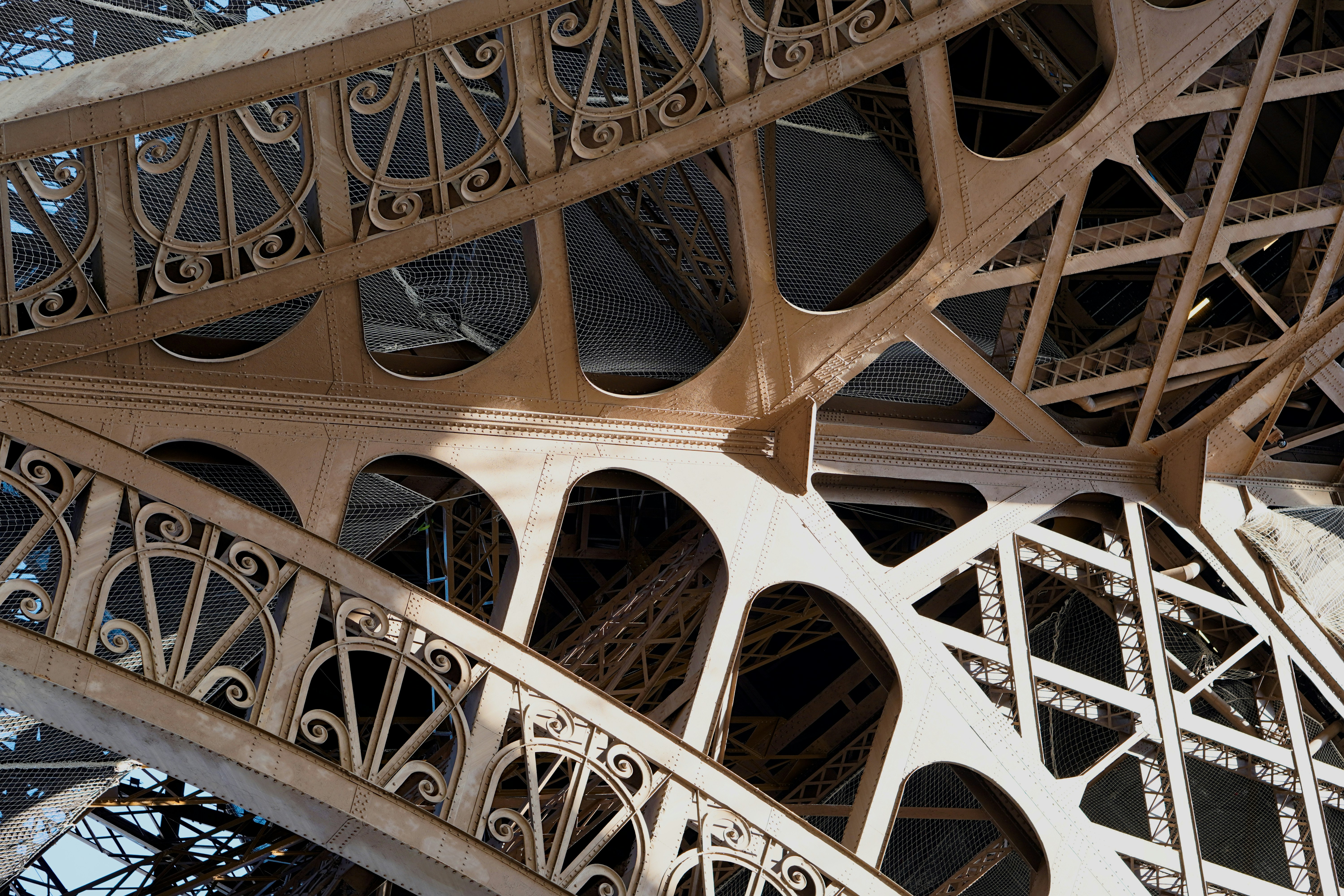
Short answer first, since it’s the question that brings most people to this page: yes, book Eiffel Tower tickets in advance if you can. The tower’s own official ticket office, at ticket.toureiffel.paris (part of toureiffel.paris, run by SETE — Société d’Exploitation de la Tour Eiffel — not a lookalike .com or .fr reseller site), sells tickets online up to 60 days ahead for elevator access and up to 30 days ahead for stairs tickets to the second floor. Weekends and the peak season — the end of June through the beginning of September, per the tower’s own attendance data — bring the heaviest demand, and buying online in advance is the only way to guarantee summit access regardless of how crowded a given day gets; walk-up summit-ticket sales at the on-site ticket office may be suspended once the tower reaches capacity. If online tickets for your date are gone, on-site ticket booths at the tower still sell tickets subject to availability, but that means competing for the same limited daily capacity as everyone else rather than a separate reserve. The rest of this guide covers what surrounds that decision: where to stay, how to get in from either airport, and how comprehensively Paris’s own metro network covers the city.
Where to base yourself
Le Marais, spanning the 3rd and 4th arrondissements on the Right Bank, is a common first-timer’s pick: central, walkable to Notre-Dame, the Louvre, and the Latin Quarter, with several métro lines running through it, according to neighborhood guides to the city. It trades some quiet for that convenience — it’s a lively, dense district with heavy foot traffic most evenings. Saint-Germain-des-Prés, across the river in the 6th arrondissement, offers a different pace: a Left Bank neighborhood built around literary cafés, the Jardin du Luxembourg, and walkable access to the Louvre, Notre-Dame, and the Musée d’Orsay, though guides to the area note it runs more expensive than Le Marais. Both sit inside the same central ring that most guides point first-time visitors toward, rather than the outer arrondissements.
Getting there
Charles de Gaulle Airport (CDG), Paris’s main international gateway, sits about 23 km northeast of the city center. The RER B commuter rail line runs from the airport to central Paris stations including Gare du Nord in roughly 35 minutes, with a one-way adult fare of €14 as of early 2026. Orly Airport (ORY), 13 km south of the center, connects more directly than it used to: a Paris Métro Line 14 extension opened in June 2024 gives Orly its own metro station, reaching Châtelet–Les Halles in central Paris in about 25 minutes — an alternative to the older Orlyval shuttle-to-RER-B route via Antony station.
Getting around
Paris’s métro is dense by design: 16 lines and 321 stations, with 244 of those stations packed into the 105.4 km² of the City of Paris proper, spaced an average of about 548 meters apart, according to network data. That density means most of the historic core is within reach of a station on foot. The network is also still growing: the Grand Paris Express project is adding new lines and extending existing ones in stages through 2031.
What’s actually worth your time
- Eiffel Tower — Covered above on the ticket question; budget the time to book ahead rather than treating it as a walk-up stop.
- Louvre — The world’s most-visited art museum drew 8.7 million visitors in 2024, per the museum’s own press office. Its official site advises every visitor, including those with free admission, to book a time-stamped ticket online in advance rather than counting on walking in.
- Musée d’Orsay — Originally the Gare d’Orsay railway station, built from 1898 to 1900 for the World’s Fair that year, the building was converted and reopened as a museum in December 1986. It now holds the world’s largest collection of Impressionist and post-Impressionist art, per Wikipedia.
- Notre-Dame Cathedral — Reopened with ceremonies on December 7–8, 2024, five years after the April 2019 fire, following a restoration estimated at $739 million. Entry to the cathedral is free, with an optional online reservation system for timed slots, according to guides to the current visiting process.
- Montmartre and Sacré-Cœur — Construction on the basilica began in 1875 and finished in 1914, though it wasn’t consecrated until 1919, delayed by the First World War. Per Wikipedia, it’s the second most popular tourist destination in the capital after the Eiffel Tower.
Day trip: Versailles
The Palace and Park of Versailles was inscribed as a UNESCO World Heritage Site in 1979. RER C trains connect central Paris to Versailles-Château–Rive Gauche station, a 10-minute walk from the palace gates — but travel-guide estimates for the ride itself vary widely, from roughly 30–40 minutes to as much as 60–90 minutes depending on where you board and current service conditions, so it’s worth checking current RER C status before you go rather than assuming a fixed time.
Planning note
Treat the Eiffel Tower ticket, not the flight or hotel, as the first thing to lock down — its 60-day elevator window and 30-day stairs window are both shorter than most people’s trip-planning timeline, and once the date sells out, the on-site ticket office is your only remaining option. After that, Paris’s own metro coverage means the rest of the city is easier to plan around than its booking-window quirks suggest: Le Marais, Saint-Germain-des-Prés, and most of the sights above sit within a short ride of each other, with Versailles as the one genuine day trip outside the network.
Sources
- Eiffel Tower — official ticket office
- Ticket rates and opening times — official Eiffel Tower website
- Attendance and waiting times — official Eiffel Tower website
- Where to Stay in Paris — Go Ask A Local
- Charles de Gaulle Airport — Wikipedia
- Orly Airport — Wikipedia
- Charles de Gaulle Airport (CDG) to Paris by Train — Paris by Train
- Paris Métro — Wikipedia
- Grand Paris Express — Wikipedia
- 8.7 million visitors to the Musée du Louvre in 2024 — Louvre press office
- Visit — official Louvre website
- Musée d’Orsay — Wikipedia
- Notre-Dame de Paris — Wikipedia
- Notre Dame Reservation System — How to Book (2026) — Paris Notre-Dame
- Sacré-Cœur, Paris — Wikipedia
- Palace and Park of Versailles — UNESCO World Heritage Centre
- How to Get From Paris to Versailles by Train — Free Tours by Foot
- Paris to Versailles by train for the perfect day trip — Trainline
Read the Top 10 Places to Visit in France roundup for how Paris fits into a wider France trip.