Lisbon’s metro network — built from 1955 and split into four color-coded lines by the 1990s — does not reach the hill neighborhoods most first-time visitors come to see. Alfama, Graça, and most of Belém sit outside the system entirely, per independent transit guides to the network, which means the trams and your own legs do more work here than in most European capitals. That single fact shapes almost everything else about visiting Lisbon well.
Where to base yourself
Baixa and Chiado, the flat grid rebuilt after the 1755 earthquake, are the default first-timer’s base: central, walkable, and the only part of the historic core the metro actually serves well (Baixa-Chiado station sits on the green and blue lines). The tradeoff is crowding — these are the most tourist-dense blocks in the city. Príncipe Real, a 10–15 minute walk uphill, offers a quieter, more residential alternative with better restaurants and city views, at the cost of some elevation. Alfama itself is worth a night or two for atmosphere — it’s the medieval quarter that survived the 1755 earthquake because its bedrock hill absorbed the shockwaves and its elevation kept the following tsunami out — but its steep, narrow lanes and thin transit coverage make it a harder base for a full stay than a place to visit on foot from elsewhere.
Getting there
Humberto Delgado Airport (LIS), Lisbon’s primary airport, sits just 6.6 km from the center and connects directly to the red metro line — most visitors staying in Baixa or Chiado will need one line change to reach their hotel. Cascais Airport (CAT), 18.7 km out, handles a smaller volume of general aviation and charter traffic and isn’t a realistic option for most commercial travelers.
Getting around
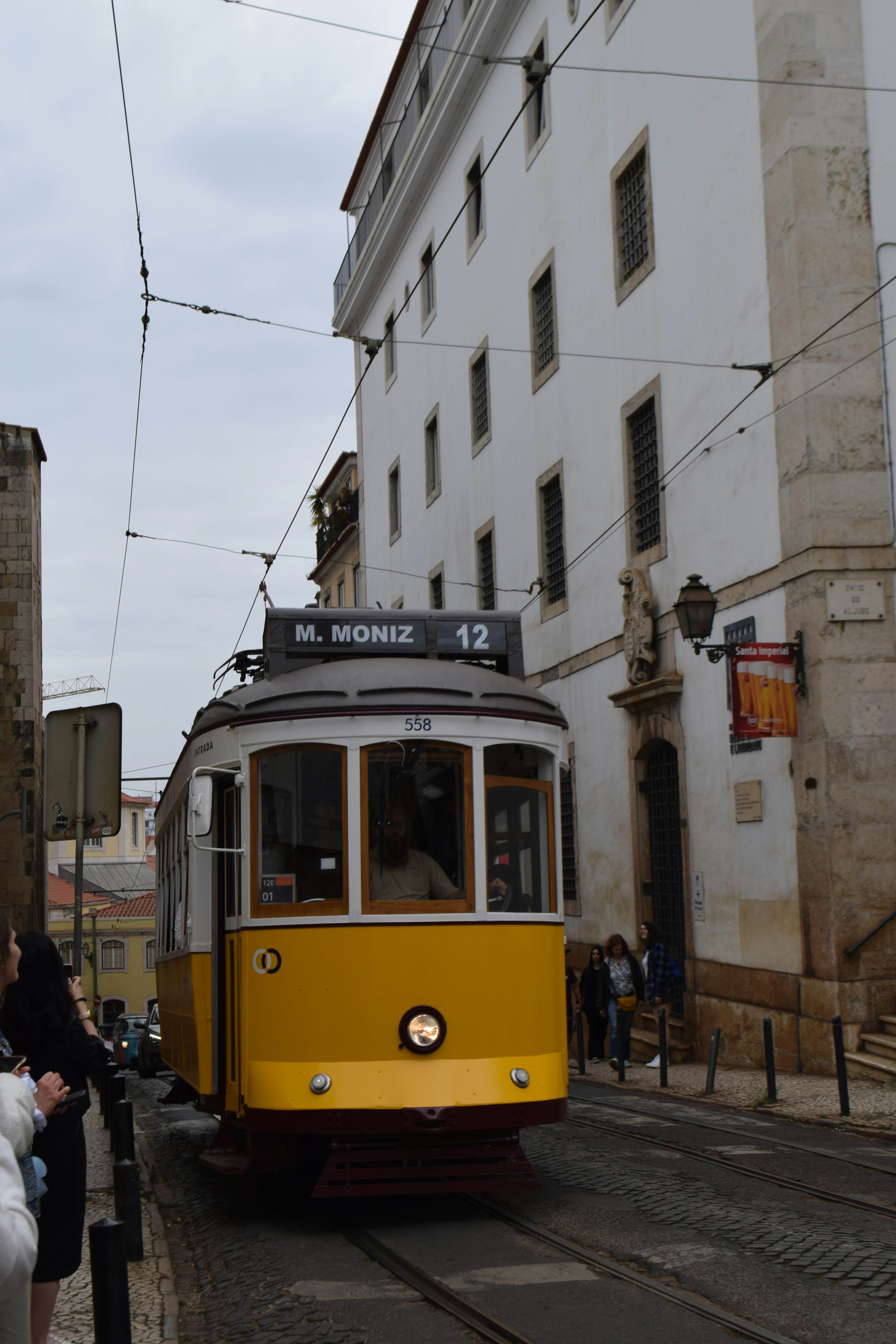
Once you’re in the historic core, walking beats the metro: guides to the system note it’s routinely faster to walk across Baixa, Chiado, and Alfama than to find and ride a connecting metro line, since the network follows the two main avenues out from downtown rather than looping through the old hill districts. For the hills themselves, the vintage trams — tram 28 running through Alfama and Graça, tram 12 on a shorter loop — are the practical answer, not just a photo opportunity. Good-weather odds for walking climb through the year: FarSerene’s seed weather data for Lisbon puts good-weather probability at 55% in January and February, climbing to 90% across June, July, and August.
What’s actually worth your time
- Castelo de São Jorge — The hilltop citadel’s core dates to Moorish Berber rebuilding in the 10th and 11th centuries, on a site fortified since at least the 2nd century BC; Portugal’s first king, Afonso Henriques, took it from the Moors in the 1147 Siege of Lisbon, a turning point in the country’s founding.
- Belém Tower and Jerónimos Monastery — Both UNESCO-listed since 1983, and both worth a closer look than a photo stop: the monastery took roughly a century to build after construction began in 1501, funded by a tax on the same spice trade its ships protected.
- Padrão dos Descobrimentos — The riverside monument looks historic but is younger than it seems: first built in flimsy plaster for a 1940 exhibition, then rebuilt in permanent stone and concrete in 1960 to mark 500 years since Henry the Navigator’s death. Climb it (lift or 267 steps) for a Belém-district view most visitors skip.
- Calouste Gulbenkian Museum — One of the world’s most selective private art collections, willed to Lisbon by oil magnate Calouste Gulbenkian after a planned London museum fell through around World War II; note that the main Founder’s Collection building is closed for renovation until July 2026, though the gardens and Modern Art Centre stay open.
- National Pantheon (Church of Santa Engrácia) — Started in 1682 and not finished until 1966, its 284-year construction gave Portuguese the expression “obras de Santa Engrácia” for a project that never ends.
- Belém Palace and São Bento Palace — The seats of Portugal’s presidency and parliament, respectively: Belém has been the president’s official residence since 1910, while São Bento started as a 1598 Benedictine monastery before Portugal’s parliament moved in after religious orders were dissolved in 1834.
Day trip: Sintra
Sintra’s hilltop Pena Palace and its cluster of Romantic-era estates were UNESCO-listed in 1995 as the first Cultural Landscape recognized in Europe. It’s a genuine day trip, not a stop on a through-route — regular trains run from Rossio station in about 40 minutes, but the palaces themselves sit up a hill best reached by local bus or tuk-tuk from the station, so budget a full day rather than a half.
Planning note
Lisbon’s metro, trams, and walking each cover different parts of the city — plan your route by neighborhood, not by assuming one mode gets you everywhere. Belém and the Alfama hills are effectively separate logistics problems from the flat Baixa-Chiado core, and Sintra is a full day away by train, not an add-on to a Belém afternoon.
Sources
- Lisbon Metro — an independent tourist guide
- Alfama Travel Guide — Rough Guides
- Where to Stay in Lisbon — Go Ask A Local
- UNESCO World Heritage Centre — Monastery of the Hieronymites and Tower of Belém
- UNESCO World Heritage Centre — Cultural Landscape of Sintra
- Origins and Development — Castelo de São Jorge
- Padrão dos Descobrimentos history
- Calouste Gulbenkian Museum — Wikipedia
- National Pantheon — Lisbon For 91 Days
- Belém Palace — GoLisbon
- São Bento Palace — A View On Cities
Read the Top 10 Places to Visit in Portugal roundup for how Lisbon fits into a wider Portugal trip.