Hungary’s top places to visit are the Hungarian Parliament Building, Buda Castle, Fisherman’s Bastion, the Chain Bridge, Heroes’ Square, Andrássy Avenue, the Great Market Hall, Széchenyi Thermal Bath, Lake Balaton, and the Tokaj wine region. Hungary’s accommodations welcomed 18 million guests in 2024 — 9.3 million domestic and 8.7 million foreign, up 11% from 2023 — a record year in which more foreign visitors traveled to Hungary than ever before, according to Hungary Today, citing Hungarian Tourism Agency figures.
- Hungarian Parliament Building — Opened in 1902 and fully completed by 1904, it stands 96 meters tall as a deliberate allusion to 1896, the year Hungary celebrated the millennium of its founding, and remains the largest building in Hungary at 268 meters long and 123 meters wide.
- Buda Castle — First completed in 1265 under King Béla IV, with the Baroque palace occupying most of today’s site built between 1749 and 1769; UNESCO World Heritage-listed since 1987 as part of “Budapest, including the Banks of the Danube, the Buda Castle Quarter and Andrássy Avenue.”
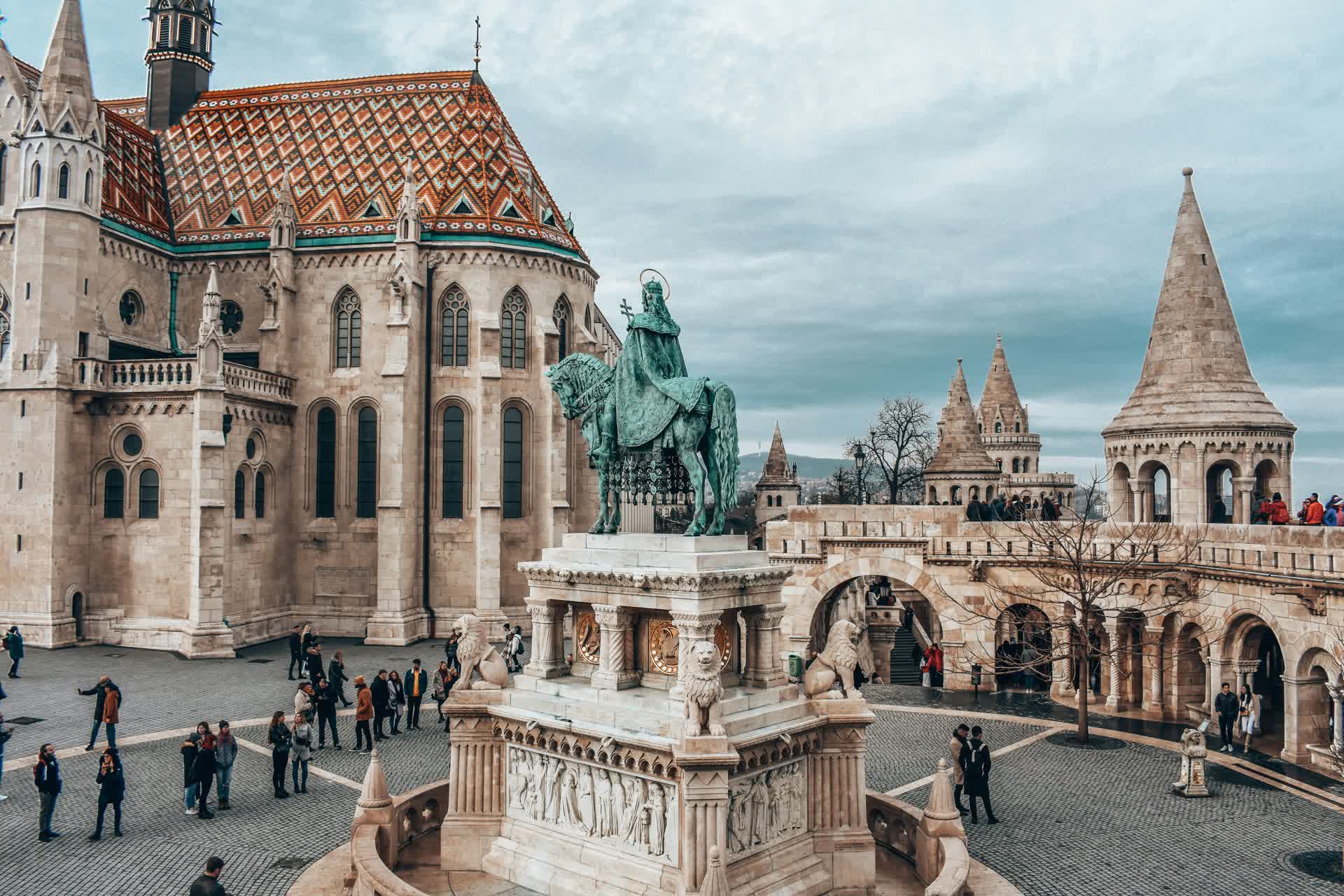
- Fisherman’s Bastion — Built between 1895 and 1902 by architect Frigyes Schulek, its seven turrets symbolize the seven Magyar chieftains who founded Hungary in 895.
- The Chain Bridge (Széchenyi Lánchíd) — Opened November 20, 1849, as Hungary’s first permanent bridge across the Danube, spanning 375 meters with a 202-meter central span that was among the largest in the world when it was built.
- Heroes’ Square — Construction began in 1896 and the Millennium Monument was inaugurated in 1905, commemorating the 1,000th anniversary of the Hungarian conquest of the Carpathian Basin in 896.
- Andrássy Avenue — Inaugurated August 20, 1876; the metro line built beneath it between 1894 and 1896 was Continental Europe’s first underground railway.
- Great Market Hall — Opened February 15, 1897, designed by architect Samu Pecz, and still Budapest’s largest and oldest indoor market.
- Széchenyi Thermal Bath — Opened June 16, 1913, and Europe’s largest medicinal bath, with 18 pools (3 outdoor, 15 indoor) fed by thermal springs at 74°C and 77°C.
- Lake Balaton — Stretching 78 kilometers long across 600 square kilometers, it’s the largest lake in Central Europe.
- The Tokaj Wine Region — UNESCO World Heritage-listed in 2002 as the Tokaj Wine Region Historic Cultural Landscape, with vineyards in the area documented since the 12th century.
Planning note
Budapest’s core (the Parliament, Buda Castle, Fisherman’s Bastion, the Chain Bridge, Heroes’ Square, Andrássy Avenue, the Great Market Hall, and Széchenyi Bath) is walkable or a short metro ride apart, but Lake Balaton and the Tokaj wine region sit roughly 1.5–2 hours and 2.5 hours from the capital in opposite directions — treat each as its own day trip or overnight within a broader multi-city itinerary rather than trying to combine them with the city center in one day.
Sources
- Hungary Today — Latest Data Reveals a Record Year for Tourism
- Wikipedia — Hungarian Parliament Building
- Wikipedia — Buda Castle
- Wikipedia — Fisherman’s Bastion
- Wikipedia — Széchenyi Chain Bridge
- Wikipedia — Heroes’ Square (Budapest)
- Wikipedia — Andrássy út
- Wikipedia — Great Market Hall
- City Park Budapest (official) — Széchenyi Thermal Bath
- Wikipedia — Széchenyi thermal bath
- Wikipedia — Lake Balaton
- Wikipedia — Tokaj wine region
Read the Top 10 Countries to Visit in 2026 roundup for how Hungary compares globally.