The top places to visit in Laos are Luang Prabang, the Kuang Si Falls, the Pak Ou Caves, the Plain of Jars, Vat Phou, Si Phan Don, Pha That Luang and Patuxai in Vientiane, Tham Kong Lo, and the Bolaven Plateau. International tourism saw over 4.12 million visits in 2024, a 21% increase, according to figures reported by the Minister of Information, Culture and Tourism and carried by KPL, the Lao state news agency.
- Luang Prabang — Designated a UNESCO World Heritage Site in 1995, the city blends Lao architecture, European colonial buildings, and over 30 Buddhist temples, and daily rituals such as the morning alms-giving ceremony persist in its protected villages. It became the capital of the Lan Xang kingdom in 1353, and its name, meaning “Royal Buddha Image,” comes from the Phra Bang statue.
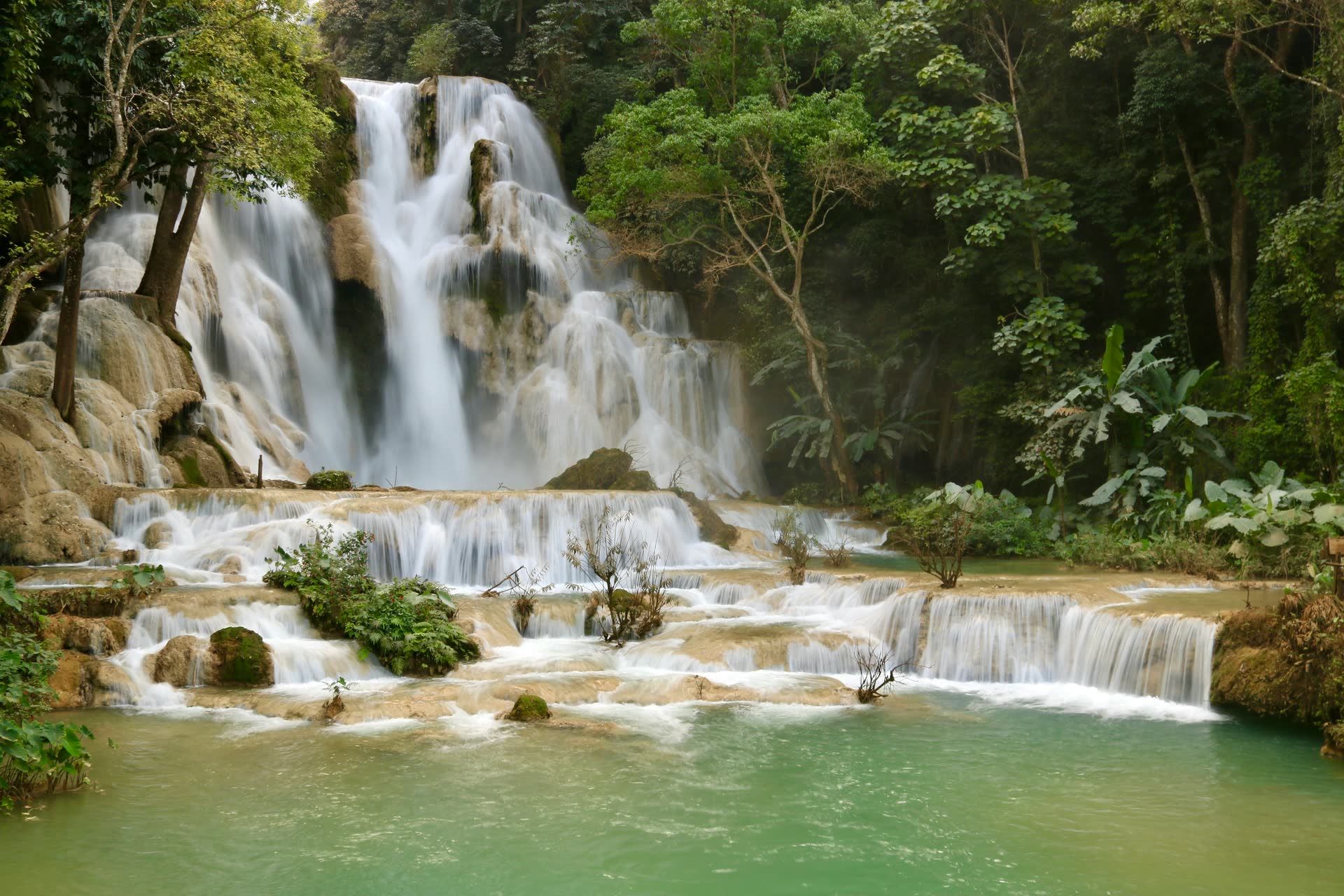
- Kuang Si Falls — A multi-tiered waterfall about 29 km south of Luang Prabang. It begins in shallow pools atop a steep hillside that lead to a main fall with a 60-metre drop, and the water runs in cascades over white limestone into turquoise pools.
- Pak Ou Caves — Two caves, Tham Ting (lower) and Tham Theung (upper), overlooking the Mekong 25 km north of Luang Prabang, about two hours upstream. Hundreds of very small, mostly damaged wooden Buddha figures are laid out on their wall shelves in many different postures, from meditation to reclining.
- The Plain of Jars — A megalithic archaeological landscape on the Xiangkhoang Plateau, made up of thousands of stone jars in clusters ranging from one to several hundred, inscribed on the UNESCO World Heritage List in 2019. Researchers dated the placement of the jars to as early as 1240 to 660 BC, and finds of human remains, burial goods, and ceramics around them support the interpretation that they were linked to burial practices.
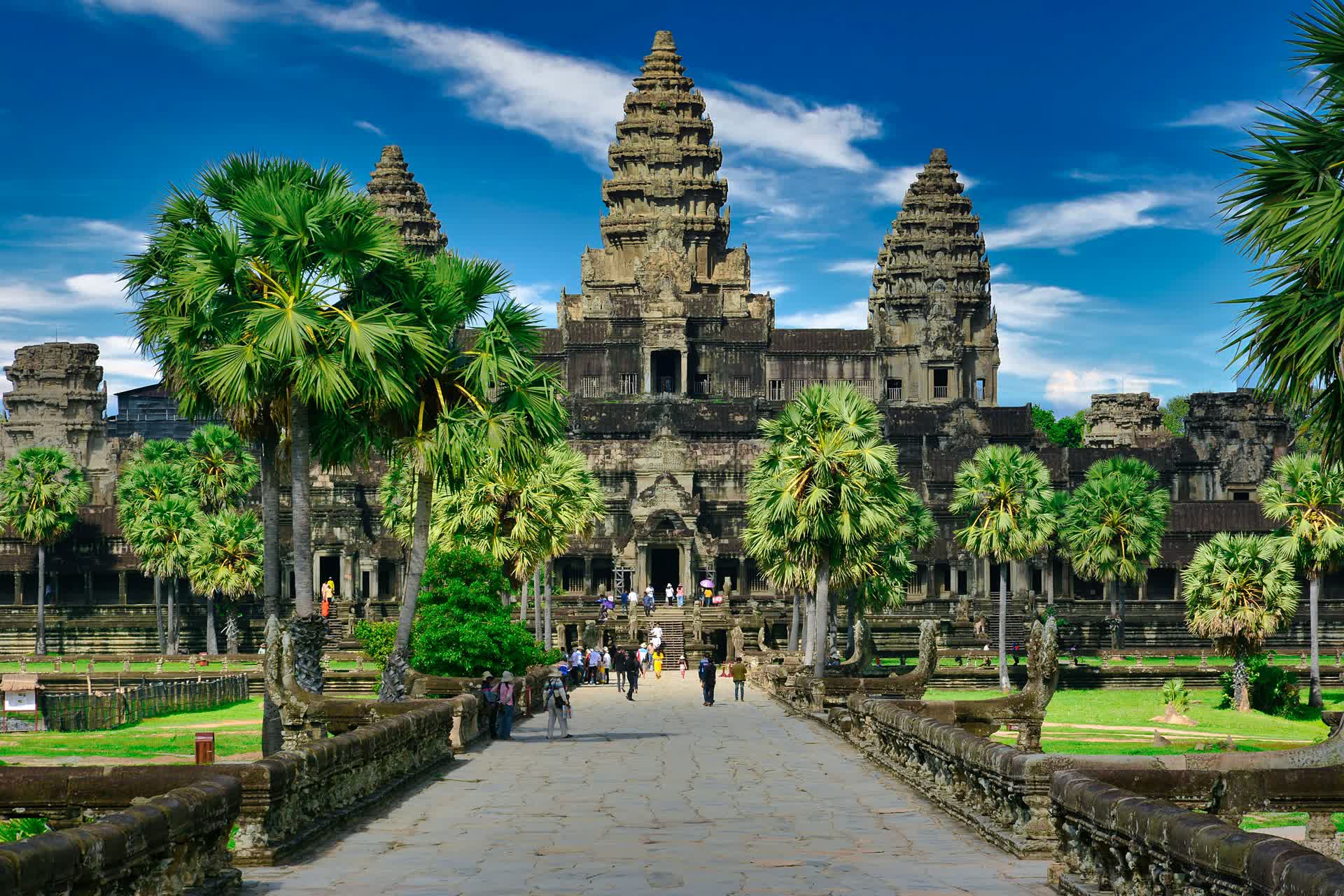
- Vat Phou — A ruined Khmer-Hindu temple complex in southern Laos, designated a World Heritage Site in 2001. The first megalithic stone structures on the site were probably built as early as the second century BCE, and a festival is held there each February.
- Si Phan Don — The “4,000 islands,” a riverine archipelago in the Mekong in Champasak Province, bordering Cambodia. Half of its islands are submerged when the river floods. Tourism concentrates on Don Khong, Don Det, and Don Khon, and the islands hold the remains of Laos’s first railway, built by the French to bypass the impassable rapids of the Khone Phapheng Falls.
- Pha That Luang, Vientiane — A gold-covered Buddhist stupa in the capital. King Setthathirat, who relocated his capital from Luang Prabang to Vientiane, ordered its construction in 1566; it was destroyed during the Thai invasion of 1828, and after an unsuccessful first restoration attempt it was redesigned and reconstructed in the 1930s.
- Patuxai, Vientiane — A war monument built between 1957 and 1968 and dedicated to those who fought for independence from France. It was built with funds and cement from the United States that had been intended for a new airbase, which earned it the nickname “vertical runway.”
- Tham Kong Lo — A karst limestone cave in Phu Hin Bun National Park, Khammouane Province, roughly 130 km north of Thakhek, on the Nam Hin Bun River, which flows into it. The cave runs about 7 km, with passages up to 90 metres wide and 100 metres high in parts.
- The Bolaven Plateau — An elevated region in southern Laos, mostly within Champasak Province, lying at approximately 1,000 to 1,350 metres above sea level between the Annamite Range and the Mekong. It is crossed by several rivers with many waterfalls, and the French planted coffee there during the colonial period.
Planning note
Luang Prabang, in north-central Laos, is the natural base for the first three stops: the Kuang Si Falls (about 29 km south) and the Pak Ou Caves (25 km north) are both reachable from the town. Pha That Luang and Patuxai are both in Vientiane. Si Phan Don and most of the Bolaven Plateau sit in Champasak Province in the south, and Vat Phou is also in southern Laos, so those three work as one leg. The Plain of Jars (Xiangkhouang Province) and Tham Kong Lo (Khammouane Province) are each in a different province from all of these, so plan each as its own leg if it is a priority for you.
Sources
- KPL Lao News Agency — Laos Tourism Boom Surpasses Expectations in 2024
- Wikipedia — Luang Prabang
- Wikipedia — Kuang Si Falls
- Wikipedia — Pak Ou Caves
- Wikipedia — Plain of Jars
- Wikipedia — Vat Phou
- Wikipedia — Si Phan Don
- Wikipedia — Pha That Luang
- Wikipedia — Patuxai
- Wikipedia — Tham Kong Lo
- Wikipedia — Bolaven Plateau
Explore more of FarSerene’s destination guides, including the Top 10 Countries to Visit in 2026 roundup, for more 2026 trip inspiration.