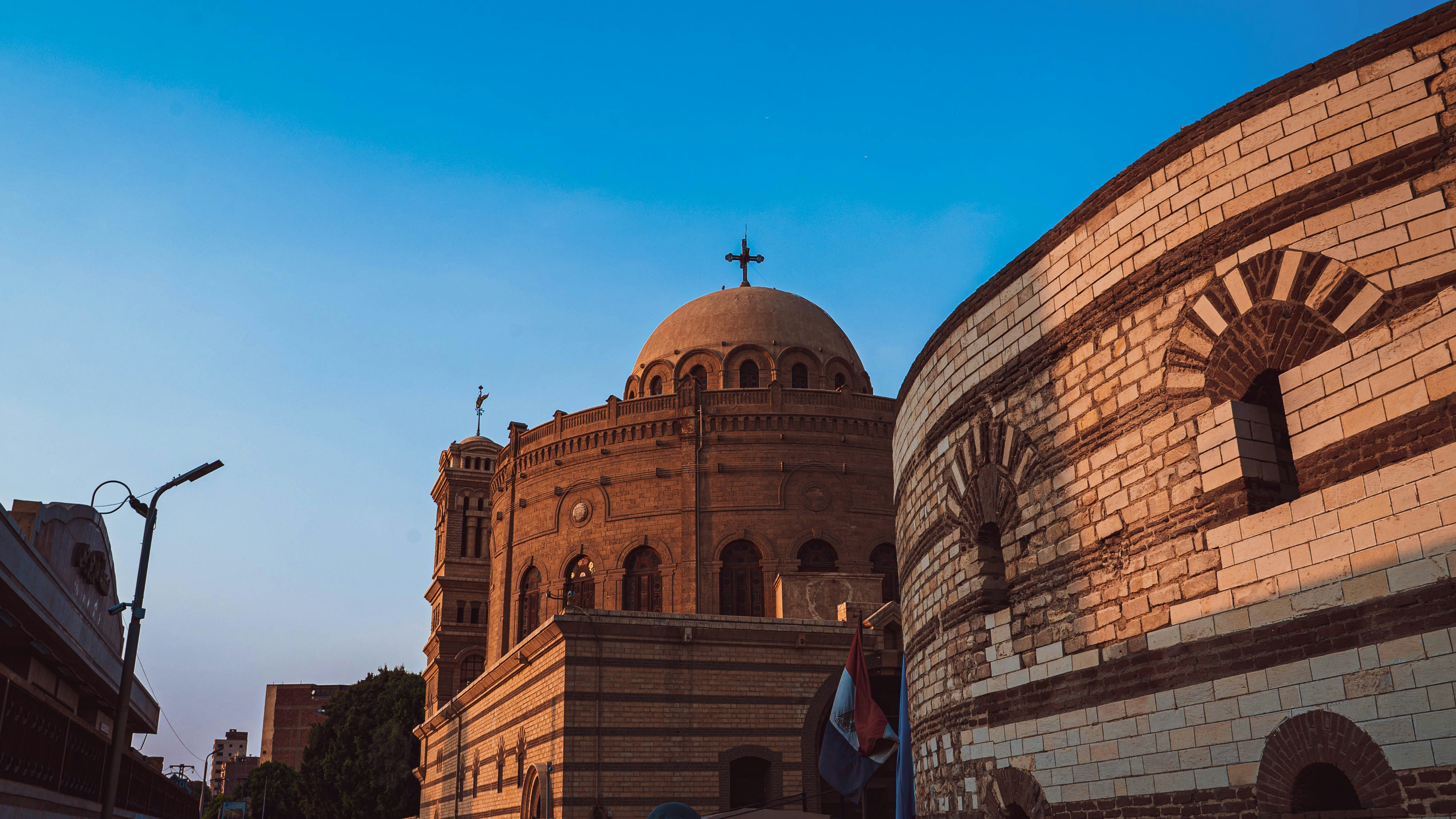
Egypt recorded 15.78 million international tourist arrivals in 2024, its highest figure ever and a 6% rise on 2023, according to national tourism reporting — and most of those visitors land in Cairo before heading anywhere else. Almost all of that traffic is drawn by the Giza Plateau, which sits far enough from central Cairo (roughly 25–45 km from the international airport, depending on route and traffic) that it functions as its own day trip rather than an afternoon add-on. This guide covers the parts of Cairo worth your time between arrival and that trip: Coptic Cairo, Islamic Cairo, and the museums built around them.
Where to base yourself
Zamalek, an upscale island neighborhood in the Nile, is the most livable base for a first visit — leafy, walkable, with the city’s better restaurant and gallery density, though it commands higher hotel rates and can mean longer bridge-crossing commutes at peak traffic. Downtown Cairo, centered on Tahrir Square, puts you within a short walk or drive of the Egyptian Museum, the Hanging Church, and Khan el-Khalili, and carries the best budget hotel and hostel options, at the cost of more street noise and congestion. Garden City, a quieter riverside district between the two, holds some of Cairo’s most established luxury hotels and is an easy walk to Downtown without sitting inside its busiest blocks.
Getting there
Cairo International Airport (CAI) is the primary gateway, about 15.8 km from the city center. Sphinx International Airport (SPX), 34.5 km out, and Capital International Airport (CCE), 57 km out and serving Egypt’s new administrative capital, both handle a smaller share of international traffic and are less practical first stops for a Cairo-based trip.
Getting around
The Cairo Metro, which opened its first line in 1987, was the first full subway system built anywhere in Africa and the Arab world — a distinction that came out of a design contract signed as early as 1970. The network has since grown to three lines, 89 stations, and about 107 km of track, carrying roughly 1.46 billion passenger trips in 2023. Line 2’s tunnel under the Nile, built in the 1990s, was the first railway tunnel under that river anywhere on the continent. That said, the metro’s station spacing is wide relative to the old city’s tangled street grid, so expect to combine metro legs with walking or a taxi/rideshare for the last stretch into Coptic Cairo or the Khan el-Khalili area — both sit in dense pedestrian districts the metro doesn’t run directly through.
What’s actually worth your time
This guide focuses on Coptic Cairo and Islamic Cairo — the city’s own old quarters — rather than re-covering the Giza Plateau, which deserves its own dedicated trip.
- El-Fustat — Egypt’s first Islamic capital, founded in 641 CE by the general Amr ibn al-As after the Arab conquest, built up around a military camp (the name derives from the Arabic word for “tent”). It grew into a city of roughly 200,000 people by the 12th century before its own vizier ordered it burned in 1168 to keep it from Crusader hands; its ruins now sit inside the Old Cairo district.
- Hanging Church — Built above the gatehouse of the Roman-era Babylon Fortress, with its nave suspended over a passage below; historians place its current structure’s origins somewhere between the 5th and 7th centuries CE, making it one of Egypt’s oldest surviving Christian buildings.
- Coptic Museum — Founded in 1908 by Marcus Simaika Pasha after he intervened to stop historic Coptic silver church vessels from being melted down for their metal value; it opened to the public in 1910 and now holds the world’s largest collection of Coptic Christian artifacts, including a set of Nag Hammadi manuscripts.
- National Museum of Egyptian Civilization — Opened in 2021 in the Fustat district; its Royal Mummies Hall, a 850 m² space beneath the main galleries, opened to the public on April 18, 2021, days after the mummies of Ramses II, Hatshepsut, and 20 other pharaohs arrived in a widely broadcast procession from the old Egyptian Museum.
- Al-Azhar Park — Built on a former 500-year-old rubbish dump that had grown into a 45-meter debris mound; the Aga Khan funded its transformation into a 30-hectare park, opened in 2005, and excavation during construction uncovered a buried 1.5-km stretch of Saladin’s 12th-century Ayyubid city wall.
- Manial Palace and Museum — Built by Prince Mohamed Ali Tewfik between 1899 and 1929 on Rhoda Island, deliberately mixing Ottoman, Moorish, Persian, and European Art Nouveau styles across its throne hall, mosque, and gilded Golden Hall.
Planning note
Treat Giza as a separate, half-to-full-day excursion from your Coptic and Islamic Cairo sightseeing rather than trying to combine them — the distance and Cairo’s traffic make a single-day “everything” itinerary unrealistic. Within the old quarters themselves, plan for more walking and taxi time than the metro map suggests, since the historic core’s narrow streets predate the transit system by centuries.
Sources
- Egypt Tourism Statistics 2025 — GoWithGuide
- Cairo Airport to the Pyramids & Downtown — Cairo Airport Ride
- The Best (and Worst!) Cairo Neighborhoods To Stay In
- Cairo Metro — Metropedia
- Cairo Metro Line 1 — Wikipedia
- Fustat — Wikipedia
- Hanging Church — Wikipedia
- Marcus Simaika — Wikipedia
- The National Museum of Egyptian Civilization — Experience Egypt
- Egypt opens pharaonic mummies hall to visitors — People’s Daily
- Aga Khan and Madame Mubarak inaugurate Cairo’s Al-Azhar Park — AKDN
- Manial Palace and Museum — Wikipedia
Read the Top Places to Visit in Egypt roundup for how Cairo, Luxor, and the Nile fit into a wider Egypt trip.