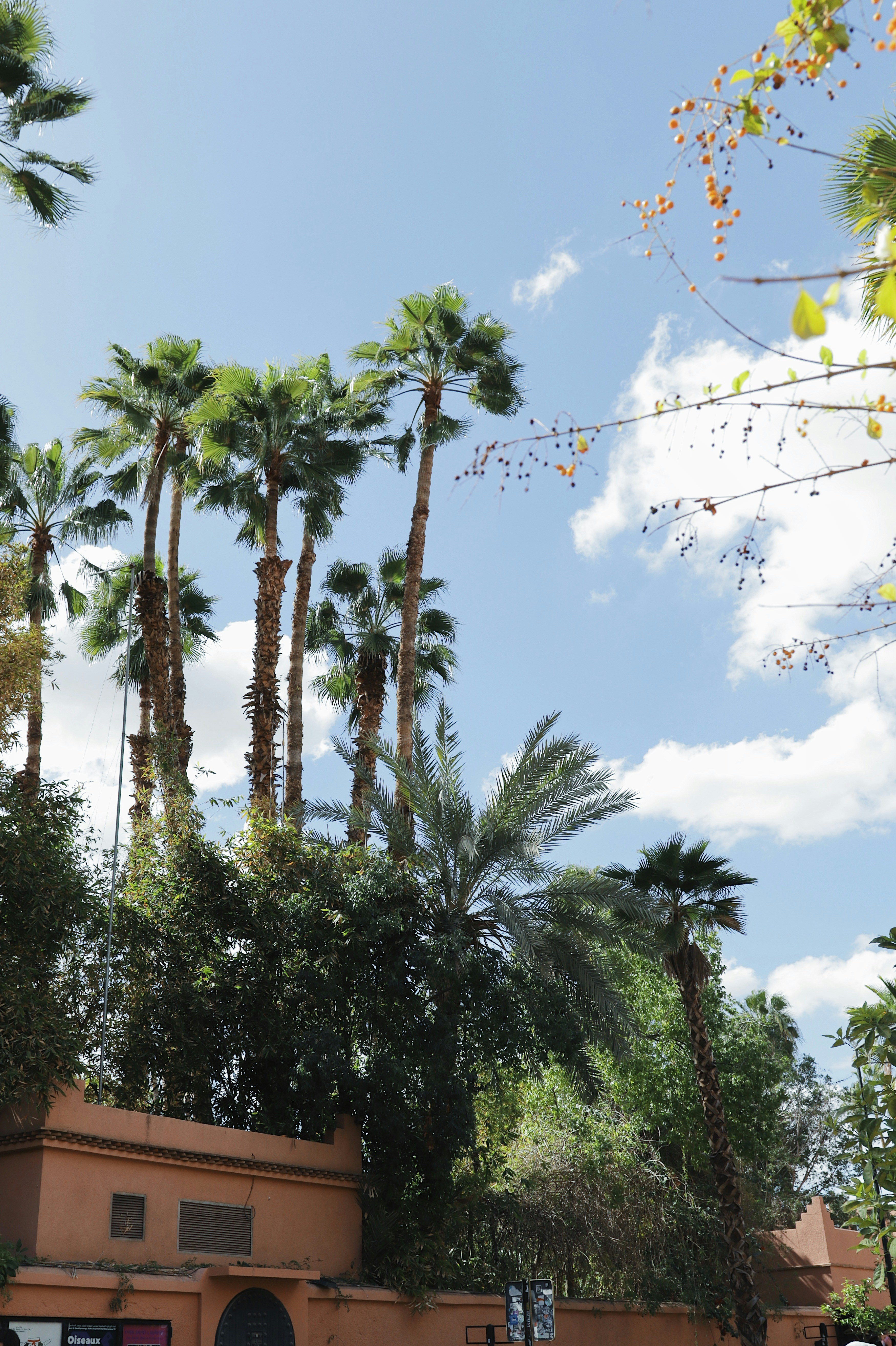
Morocco drew 17.4 million international tourists in 2024, a 20% jump on 2023 that made it Africa’s most-visited country for the first time, ahead of Egypt’s 15.7 million, according to UN Tourism data. Marrakesh is one of the country’s two leading draws, and its layout rewards a specific kind of planning: the walled medina is built for foot traffic and mule carts, not cars, while the newer city outside it runs on a completely different grid.
Where to base yourself
Marrakesh splits cleanly into two zones. The Medina — the walled old city, founded in 1070–72 by the Almoravids — holds the riads (traditional courtyard houses converted to guesthouses), the souks, and most of the historic sights within walking distance of each other, but its alleys are narrow, unmarked, and genuinely disorienting for a first-time visitor; expect to get lost at least once. Guéliz, the French-built new town outside the walls, has wider streets, more modern hotels, and easier vehicle access, at the cost of a taxi or long walk to reach the Medina’s sights each day. For a first trip centered on the historic core, a riad inside or just outside the Medina walls near Jemaa el-Fnaa is the more common choice; for longer stays or a quieter base, Guéliz works better.
Getting there
Marrakesh Menara Airport (RAK) is the primary gateway and unusually close to the center — just 4.4 km out, one of the shortest airport-to-downtown distances of any major tourist city. Ouarzazate International Airport (OZZ), 129 km away on the other side of the Atlas Mountains, serves domestic and regional routes rather than international arrivals and isn’t a practical entry point for a Marrakesh-based trip.
Getting around
The Medina has no meaningful public transit inside its walls — its street plan predates cars by roughly 900 years — so walking is the only way to move between souks, palaces, and riads once you’re inside. Petit taxis (small, metered) and grand taxis (shared, fixed-route) connect the Medina to Guéliz and the airport; agree on a fare before boarding if the meter isn’t used. Jemaa el-Fnaa, the main square at the Medina’s edge, has been a market and gathering space since the Almohad era renovated it in 1147, and UNESCO recognized it twice over — first in 1985 as part of the Medina of Marrakesh World Heritage Site, then separately in 2001 as a Masterpiece of the Oral and Intangible Heritage of Humanity for its living tradition of storytellers, musicians, and performers.
What’s actually worth your time
- Majorelle Garden — Painter Jacques Majorelle spent 40 years from 1923 building this garden and inventing the cobalt “Majorelle Blue” that coats its Art Deco studio; it fell into decline after his 1962 death until Yves Saint Laurent and Pierre Bergé bought and restored it, later scattering Saint Laurent’s ashes in its rose garden after his 2008 death. It now draws more than 700,000 visitors a year.
- Bahia Palace — Begun around 1866 by Si Moussa, a former slave who rose to become grand vizier to Sultan Hassan I, then expanded into its current scale by his son Ba Ahmad in the 1890s; it was reportedly the first building in North Africa to use stained glass as decoration.
- Almoravid Koubba — The oldest surviving monument in Marrakesh, completed in 1117 under Ali ibn Yusuf; it was buried beneath a later outbuilding for centuries and only rediscovered in 1948 and excavated in 1952, making it the single intact structure left from the city’s 12th-century Almoravid founding.
- Menara Gardens — Built around 1157 by the Almohad Caliph Abd al-Mu’min as a practical water reservoir fed by Atlas Mountains snowmelt through an underground channel system, not originally for scenery; the pavilion seen in postcard shots today dates only to 1870, a 19th-century Alaouite-era rebuild.
- Agdal Gardens — An almost 500-hectare Almohad-era orchard and reservoir complex, also dating to the 1150s, still irrigated by the same kind of underground khettara channels as Menara; together with Menara and the Medina, it was UNESCO-listed in 1985.
- Marrakech Museum and Dar Si Said — Two neighboring former palaces turned museums: Dar Si Said, built 1894–1900, now houses the National Museum of Weaving and Carpets; the nearby Marrakech Museum occupies the Dar Mnebhi Palace, built by a different vizier around 1900 and converted into a museum in 1997.
Planning note
Give the Medina more time than its size suggests — the lack of a street grid means a five-minute walk on a map can take twenty in practice, and most riads are easiest to find with a local guide meeting you at a fixed landmark rather than an exact address. Pair a Medina day with a Guéliz or garden day rather than trying to cover both in one long loop.
Sources
- Morocco: Moroccan Tourism Sets Record — UN Tourism / AllAfrica
- UN Tourism in Morocco — Africa’s Most-Visited Destination
- Medina of Marrakesh — UNESCO World Heritage Centre
- Cultural space of Jemaa el-Fna Square — UNESCO Intangible Cultural Heritage
- Majorelle Garden — Wikipedia
- Bahia Palace — Wikipedia
- Almoravid Koubba history
- Menara Gardens — Wikipedia
- Agdal Gardens — Wikipedia
- Dar Si Said — Wikipedia
- Marrakech Museum — Wikipedia
Read the Top Places to Visit in Morocco roundup for how Marrakesh fits into a wider Morocco trip.