Malaysia recorded 25 million international tourist arrivals in 2024, a 24.2% increase over 2023, according to Tourism Malaysia’s annual statistics — though it fell short of the government’s 27.3 million target. Singapore supplied the largest single share of that traffic (9.1 million visitors), a reminder that much of Malaysia’s inbound flow is regional rather than long-haul. For travelers arriving from farther afield, though, getting the airport choice right matters more than distance on a map suggests.
Getting there
Kuala Lumpur’s two airports have swapped roles over the decades. Sultan Abdul Aziz Shah Airport (SZB), commonly called Subang, sits closest to the city at 17.08 km and actually carried the “Kuala Lumpur International Airport” name until 1998 — but since the current Kuala Lumpur International Airport (KUL) opened that year in Sepang, 47.06 km from downtown, KLIA has been Malaysia’s sole gateway for long-haul international flights. Subang today handles turboprop, private aviation, and some regional carrier flights (Firefly, Batik Air Malaysia) — not the airport a first-time international visitor should expect to land at, despite being closer on the map. Malacca International Airport (MKZ), 117.81 km away, serves a different city entirely and isn’t relevant here.
Where to base yourself
KL’s tourist core is the “Golden Triangle,” anchored by two adjacent, walkable-to-each-other districts. KLCC sits around the Petronas Towers and their surrounding park, offering a more polished, upscale base with strong LRT access. Bukit Bintang, a short walk or one transit stop away, is the livelier, more food- and nightlife-driven option, anchored by the Jalan Alor food street. Either works well for a first visit; choose based on whether you want quieter and more modern (KLCC) or busier and more budget-flexible (Bukit Bintang).
Getting around
Kuala Lumpur doesn’t run a single unified metro — it’s a layered network built up since the mid-1990s under the Rapid KL brand, operated by Prasarana Malaysia. The first LRT segment opened in December 1996; the system has since grown to two MRT lines (Kajang, completed in 2017, and Putrajaya), three LRT lines, an 8.6 km elevated Monorail through the tourist core, and a BRT line, plus the separate KLIA Ekspres airport rail link. Combined, the Klang Valley network now spans roughly 593 km across 216 stations. For a typical visitor, the Monorail and the LRT’s Kelana Jaya line cover the Golden Triangle and most sightseeing; walking the core itself is realistic since KLCC and Bukit Bintang sit close together.
What’s actually worth your time
Kuala Lumpur’s database of confirmed attractions here is deliberately short — seven entries — and not every one supports a real narrative, so this list stays focused rather than padded.
The Islamic Arts Museum Malaysia, opened December 12, 1998, in the Lake Gardens district, is widely regarded as Southeast Asia’s largest Islamic art museum, with a collection built specifically to represent Islamic art traditions from China, India, and the Malay world rather than concentrating solely on the Middle East and Persia — a curatorial choice that makes it genuinely distinct from equivalent museums elsewhere. Its striking turquoise-domed architecture is worth the visit on its own.
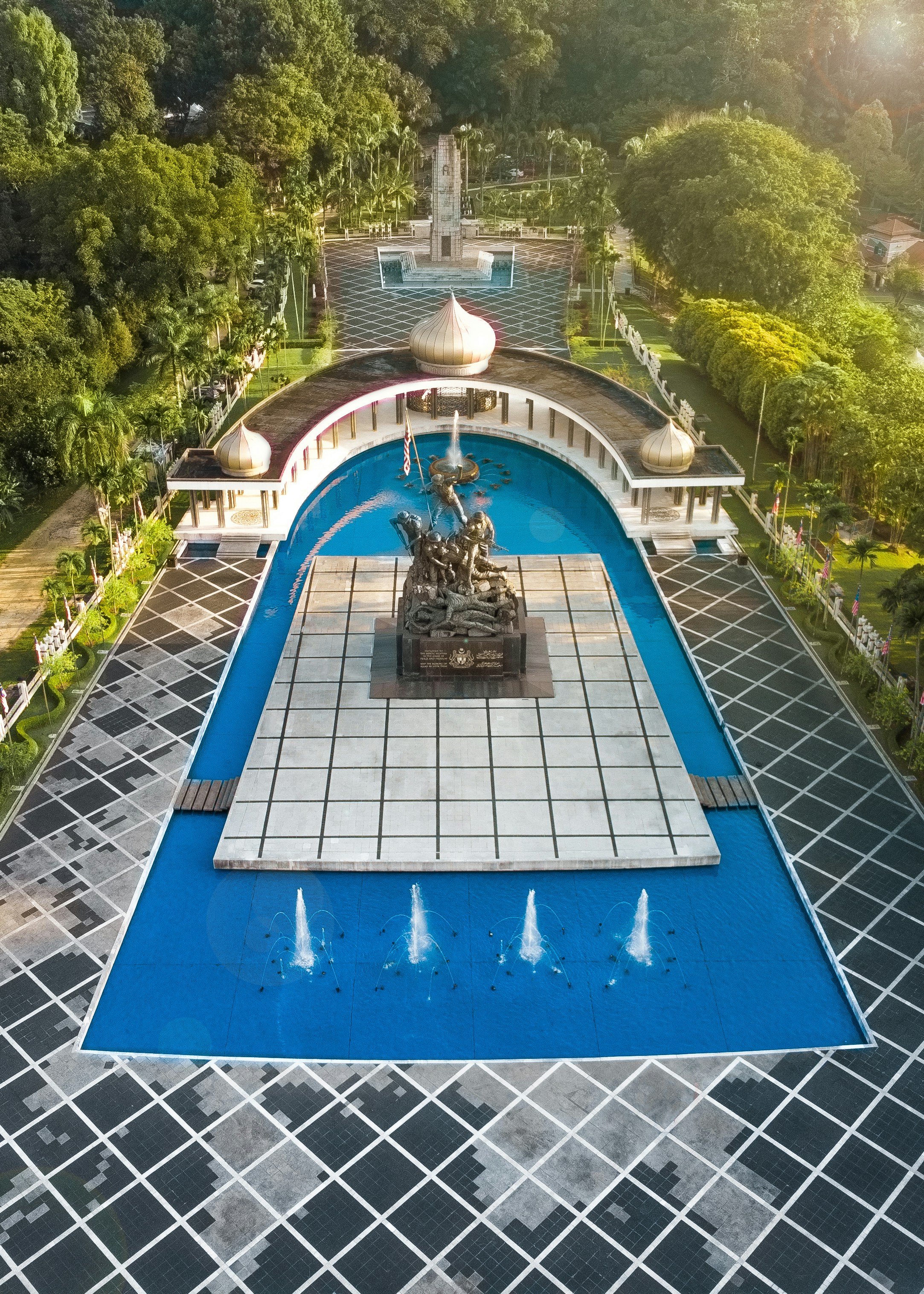
The National Monument (Tugu Negara), unveiled on February 8, 1966, was commissioned by Malaysia’s first prime minister, Tunku Abdul Rahman, and designed by Felix de Weldon — the same sculptor behind the Iwo Jima Memorial in Washington, D.C. At 15.5 meters, its bronze figure grouping commemorates those who died in the Malayan Emergency (1948–1960) and is recognized as the world’s tallest freestanding bronze sculpture group.
The Perdana Botanical Gardens surrounds both of the above sites and works as a connecting green space rather than a standalone destination — plan it as a walk between the museum and the monument rather than a separate outing.
The Tun Abdul Razak Memorial and National History Museum round out the database list; both are smaller, lower-priority stops best treated as optional add-ons if you have extra time in the Lake Gardens area rather than dedicated half-days.
Planning note
Because KL’s confirmed database of major sights is thinner than Seoul’s, Beijing’s, or Dubai’s, this is a city where a shorter, tighter day plan beats trying to stretch coverage — cluster the Islamic Arts Museum, National Monument, and Perdana Botanical Gardens into a single half-day in the Lake Gardens district, then spend the rest of your time on KL’s food scene and the Petronas Towers area, which sit outside this list but are well documented elsewhere.
Sources
- Tourism Malaysia — Malaysia Tourism Statistics in Brief 2024
- The Edge Malaysia — Malaysia falls short of 2024 international tourist arrival target with 25 mil visitors
- Wikipedia — Sultan Abdul Aziz Shah Airport
- Wikipedia — Klang Valley Integrated Transit System
- Wikipedia — Islamic Arts Museum Malaysia
- Wikipedia — National Monument (Malaysia)
Read the Top Places to Visit in Malaysia roundup for how Kuala Lumpur fits into a wider Malaysia itinerary.