India’s International Tourist Arrivals reached 20.57 million in 2024, an 8.9% increase over 2023 and 14.8% above the pre-pandemic 2019 benchmark, according to Ministry of Tourism data — enough to rank India 20th globally by that measure. Delhi and its Lutyens-era political core, rather than the Mughal monuments most first-time guides lead with, are this piece’s focus: Gandhi Smriti, the Prime Ministers’ Museum, and the sites tied to 20th-century Indian history.
Getting there
Indira Gandhi International Airport (DEL), 11.36 km from the center, remains India’s primary and uncontested gateway to Delhi — no ambiguity here. A second airport, Noida International Airport (DXN) in Jewar, 61.69 km out, was inaugurated in March 2026 and began commercial flights on June 15, 2026, but as of this writing it is domestic-only, with IndiGo, Akasa Air, and Air India Express running routes to cities like Mumbai, Bengaluru, and Chennai. International service is targeted for around September 2026 with a fuller winter schedule from late October 2026 — check current status before assuming it’s an option, but for now, book your international arrival into DEL.
Where to base yourself
Connaught Place (CP) is the standard first-timer choice: centrally located, well-lit, and sitting directly above Rajiv Chowk, the Delhi Metro’s busiest interchange (Yellow and Blue lines), which makes reaching almost any other part of the city straightforward. Hauz Khas, about 20 minutes away by metro, offers a different pace — a mix of a genuine historical site (a 14th-century water tank and tomb complex) with a denser café and nightlife scene, and it’s the neighborhood locals more often recommend for a livelier stay. Both sit in South/Central Delhi, the area most guides point first-timers toward over Old Delhi’s denser, more chaotic lanes.
Getting around
The Delhi Metro opened its first section — an 8.4 km stretch from Shahdara to Tis Hazari on the Red Line — on December 25, 2002, with just six stations. It has expanded enormously since: current figures put the network at 10 color-coded lines, roughly 270–290 stations, and up to 393 km of track, carrying a daily ridership around 6.46 million as of 2025, making it the largest metro system in India. For a Lutyens’ Delhi-focused itinerary, the Yellow Line and a short taxi or auto-rickshaw hop cover most of what’s below — this part of the city was built with wide boulevards for colonial-era administration, not a walkable historic core, so plan on more vehicle transfers than you would in a denser old-city grid.
What’s actually worth your time
This list intentionally skips the Red Fort and Qutub Minar — likely already covered in a country-wide India guide — in favor of Delhi’s Lutyens-era and modern political history.
Gandhi Smriti, formerly Birla House, is where Mahatma Gandhi spent his final 144 days and was assassinated at 5:17 PM on January 30, 1948, by Nathuram Godse. Built in 1928 as a private residence for the Birla family, the government purchased it in 1971, and the wing where Gandhi lived — his bed, his few possessions, his spectacles — has been preserved as it was. The complex now also houses the Eternal Gandhi Multimedia Museum, established in 2005.
Teen Murti Bhavan, the former residence of India’s first prime minister, Jawaharlal Nehru, and the Prime Ministers’ Museum & Library built on the same grounds, form a natural pair covering modern India’s political history — a genuinely distinct angle from the Mughal-era sites most visitors default to.
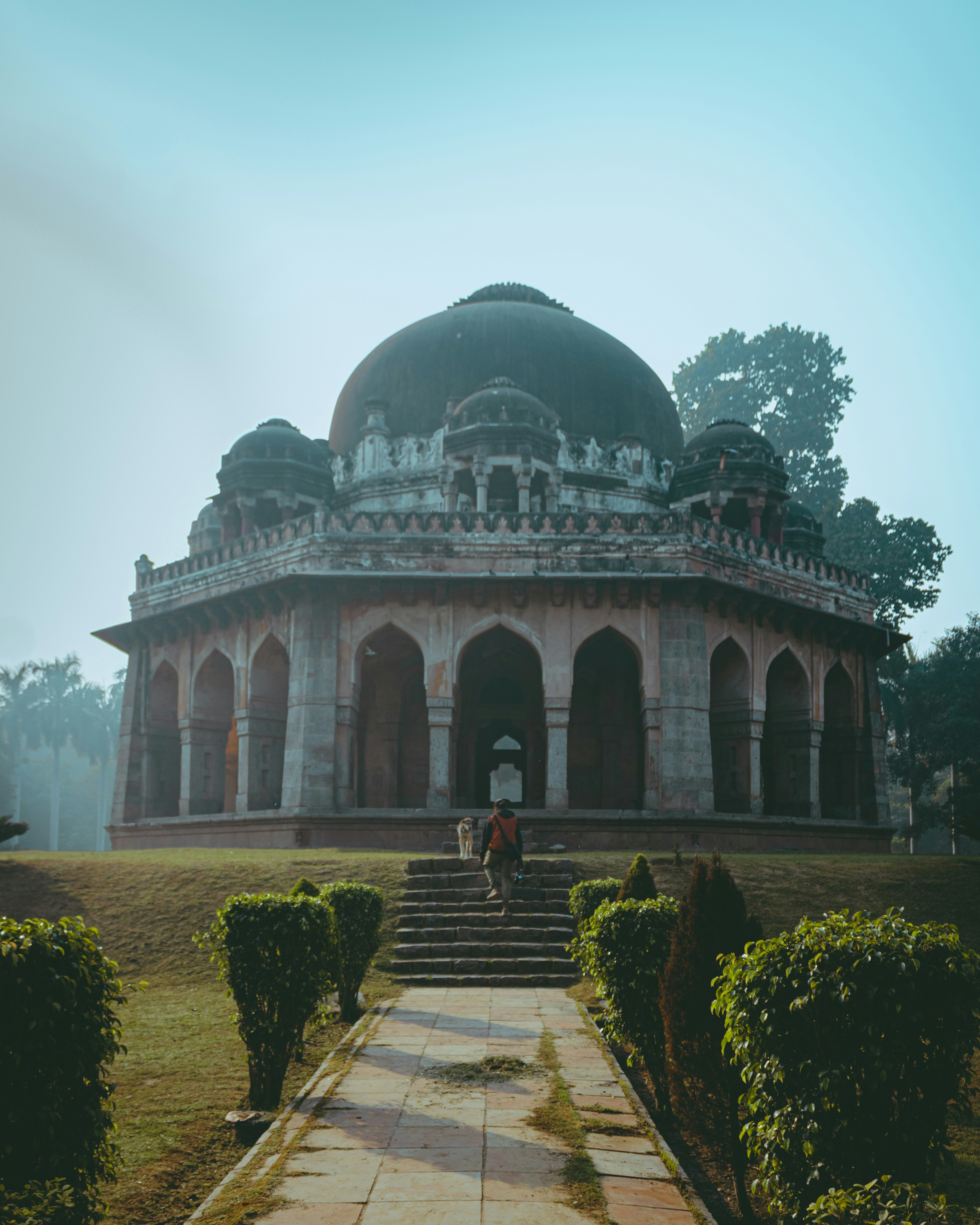
Lodi Gardens offers the older counterpoint: a 90-acre park containing tombs from the Sayyid and Lodi dynasties, including the tomb of Muhammad Shah Sayyid (built 1444, the earliest structure on-site) and the tomb of Sikandar Lodi (built 1517–1518), notable for an early double-dome design later adopted throughout Mughal architecture. It’s a working park as much as a monument, popular with morning walkers and worth an unhurried hour rather than a rushed photo stop.
Khas Mahal and St. James’ Church — the latter one of Delhi’s oldest churches, consecrated in 1836 — add smaller, quieter stops if your itinerary has room, while Buddha Jayanti Park, a green space with a Buddha statue gifted by Sri Lanka, works as a low-key break between the denser historical sites.
Planning note
Lutyens’ Delhi is spread out and vehicle-dependent in a way the old city isn’t — budget transfer time between Gandhi Smriti, Teen Murti Bhavan, and Lodi Gardens rather than assuming a walkable cluster, and pair this itinerary with a separate day for the Red Fort/Old Delhi side of the city rather than trying to merge both into one long day.
Sources
- Ministry of Tourism, Government of India (PIB) — International Tourist Arrivals reached 20.57 million in 2024
- Wikipedia — Delhi Metro
- Business Standard — From six stations in 2002 to 288 now, Delhi Metro completes 21 years of ops
- Happy Fares — Noida International Airport (DXN, Jewar) 2026 guide
- Wikipedia — Gandhi Smriti
- Wikipedia — Assassination of Mahatma Gandhi
- Wikipedia — Lodi Gardens
- Wikipedia — Tomb of Sikandar Lodi
Read the Top Places to Visit in India roundup for the Mughal-era monuments this guide deliberately leaves out.