South Korea received 16.37 million foreign visitors in 2024, a 48.4% jump from 2023 and just short of the 2019 pre-pandemic peak, according to Korea Tourism Organization data reported by The Korea Herald. Most of that traffic funnels through Seoul, and most first-time visitors get one thing wrong before they even land: assuming the closer airport is the right one.
Getting there
Seoul has two passenger airports. Gimpo International Airport (GMP) sits just 18.26 km from the city center, but it now handles mostly domestic routes plus a limited slate of short-haul international flights to Japan, China, and Taiwan. Incheon International Airport (ICN), 49.47 km out, has been Korea’s primary international gateway since it opened in 2001, and it’s where almost every long-haul flight from Europe, North America, the Middle East, and Oceania actually lands. Book your inbound flight into Incheon unless you’re connecting from elsewhere in East Asia — Gimpo’s proximity doesn’t make it the arrival point for most travelers. A third airport, Wonju (WJU), 86.13 km away, is a minor domestic field and irrelevant for a Seoul trip.
Where to base yourself
Myeongdong is the default first-timer base: dense with shopping, street food, and beauty retailers, sitting close to Namsan and several subway interchanges, which makes it easy to reach almost anywhere else in under 30 minutes. Insadong, a roughly 15-minute walk from Myeongdong, sits closer to the palace cluster and Bukchon’s traditional hanok streets, so it suits travelers prioritizing the historic core over shopping. Hongdae trades convenience for a younger, nightlife-and-café scene around its university district, while Gangnam offers newer hotel stock and a more polished, modern feel south of the river — a reasonable choice if you want distance from the tourist center without sacrificing transit access.
Getting around
Seoul’s subway opened its first line on August 15, 1974 — Liberation Day, chosen deliberately — and has since grown into one of the world’s largest systems. The core numbered network (Lines 1–9, run by Seoul Metro and Korail) now anchors a wider metropolitan system that, including suburban and private lines, spans roughly 24 lines and over 650 stations across Seoul, Incheon, and Gyeonggi-do. Ridership on the core lines alone hit 2.42 billion in 2024. In practice, you’ll rarely need more than three or four of those lines: Line 1 through the old city center, Line 2’s loop through Hongdae and Gangnam, and Line 3 for the palace district. The historic core — Gyeongbokgung, Insadong, and Bukchon — is compact enough to walk between sights once you’ve taken the subway there.
What’s actually worth your time
Seoul’s five former royal palaces of the Joseon dynasty are its signature draw, but they’re not interchangeable. Changdeokgung is the only one of the five with UNESCO World Heritage status, listed on December 6, 1997, largely for its “Secret Garden” (Huwon) and its layout, which follows the natural contours of the site rather than a strict formal grid — a deliberate contrast to Beijing’s rigidly axial Forbidden City.
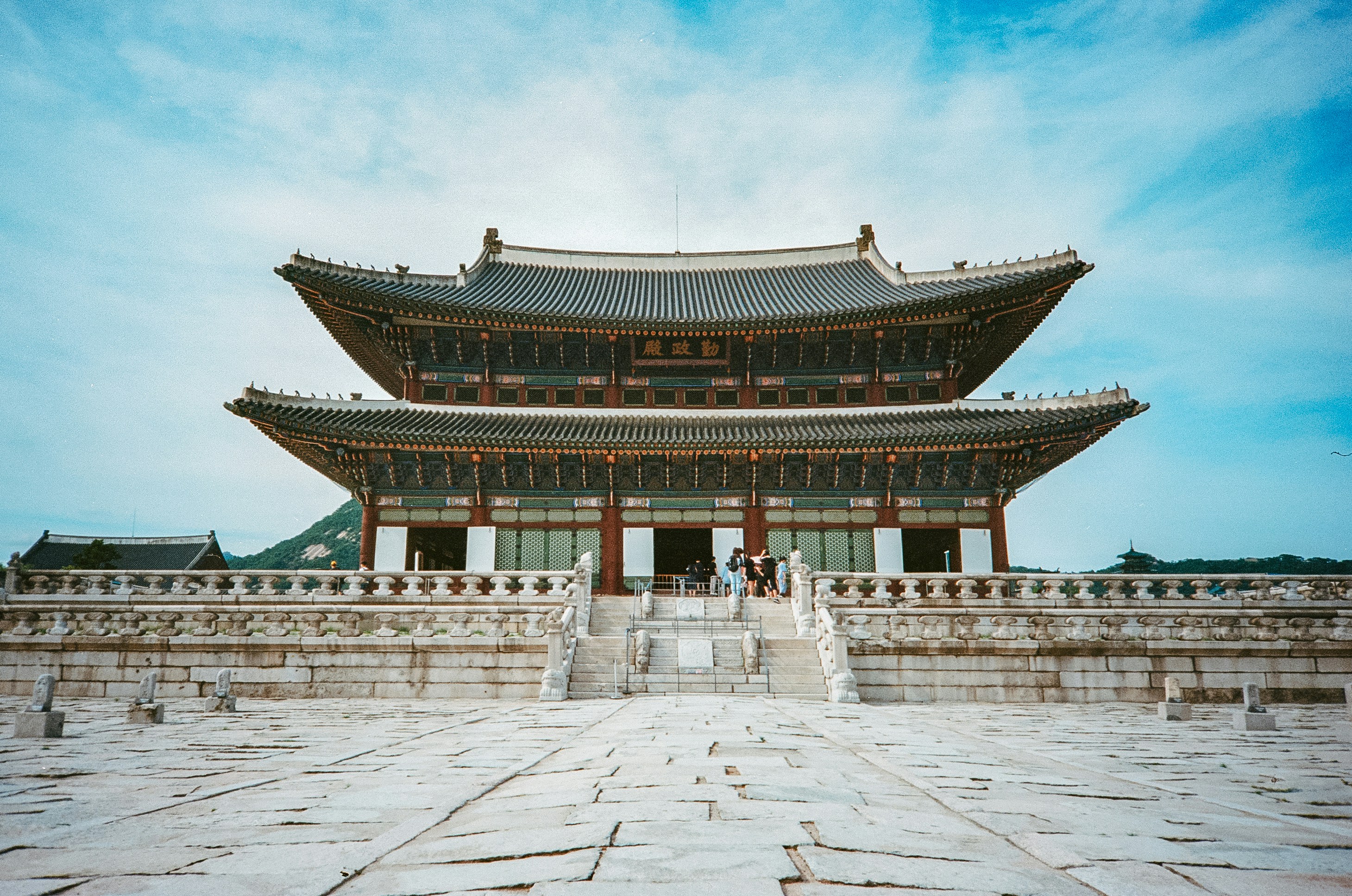
Gyeongbokgung, the largest and most visited, tells a harder story: built in 1395 as the primary Joseon palace, burned by Japanese forces during the 1592 Imjin invasion, left in ruins for 270 years, then rebuilt starting in 1867 under Regent Heungseon during King Gojong’s reign — only to be systematically demolished again under Japanese colonial rule after 1910, until fewer than ten of its original buildings survived. What stands today is largely 1990s-onward reconstruction.
Deoksugung has the more unusual profile of the five: rebuilt as the seat of the short-lived Korean Empire after Emperor Gojong returned here in 1897 following a year sheltering in the Russian legation, it mixes traditional wooden halls with Seokjojeon, a Western neoclassical stone building completed in 1910. Its stone-wall perimeter road, Doldam-gil, is one of the city’s most walked routes each autumn.
Changgyeonggung and Gyeonghuigung round out the set with smaller crowds and less restoration spend — worth a stop if you have three palace visits in you rather than five, but skippable on a tight schedule.
Beyond the palaces, the National Museum of Modern and Contemporary Art’s Seoul branch, inside the former Defense Security Command compound near Gyeongbokgung, and Namsangol Hanok Village, a cluster of relocated 19th-century hanok houses arranged around a traditional garden, both work well as lower-key add-ons within walking distance of the palace district. Unhyeongung, the former residence of Regent Heungseon (Gyeongbokgung’s own restorer), is a smaller, quieter counterpoint to the main palaces and sits right in the Insadong area.
Planning note
Don’t try to do all five palaces in one day — Changdeokgung’s Secret Garden requires a timed, guided-only entry that limits how you can sequence a day around it, and each palace runs 60–90 minutes minimum if you’re reading placards rather than speed-walking. Pair one major palace (Gyeongbokgung or Changdeokgung) with Insadong or Bukchon on the same day, and treat Namsangol and the smaller palaces as fill-in stops on days built around other neighborhoods.
Sources
- The Korea Herald — South Korea tourism surges in 2024 with record spending and arrivals
- UNESCO World Heritage Centre — Changdeokgung Palace Complex
- Cultural Heritage Administration — Changdeokgung Palace Complex
- Cultural Heritage Administration — Gyeongbokgung Palace and Its History
- Seoul Metropolitan Government — Deoksugung Palace
- Wikipedia — Seokjojeon
- Wikipedia — Seoul Metropolitan Subway
- Simple Flying — Seoul Gimpo Vs Incheon: Which Airport Is Better?
- The Wayfaring Soul — Best Areas to Stay in Seoul for First Time Visitors
Read the Top Places to Visit in South Korea roundup for how Seoul fits into a wider Korea itinerary.