Germany drew 37.5 million international arrivals in 2024, the eighth-highest total in the world, per UN Tourism. It also holds 55 UNESCO World Heritage Sites, third-most of any country after Italy and China — including a July 2025 addition, the fairy-tale castles of King Ludwig II of Bavaria. The route below splits the country into three practical bases: Berlin, Bavaria and the Romantic Road, and the Rhine and the west.
Berlin
- Brandenburg Gate — Built between 1788 and 1791 under King Frederick William II of Prussia, modeled on the Propylaea of the Athenian Acropolis. Sealed inside the restricted zone during the Cold War, its 1989 reopening became the visual symbol of German reunification.
- Museum Island — Five museums built between 1830 and 1930 on an island in the Spree, inscribed as a UNESCO World Heritage Site in 1999 for documenting the architectural development of the public museum across a century.
- Berlin Wall Memorial and East Side Gallery — The East Side Gallery is a 1,316-meter stretch of the Wall painted by 118 artists from 21 countries between early 1990 and its official opening that September; it draws more than 3 million visitors a year. The separate Berlin Wall Memorial on Bernauer Strasse preserves a section of the border strip with its original watchtower.
Bavaria and the Romantic Road
- Neuschwanstein Castle — Commissioned by King Ludwig II starting in 1869 as a private retreat modeled on medieval romanticism and Wagner’s operas, left unfinished (14 of a planned 200 rooms) at his death in 1886. Germany’s most-visited castle, drawing roughly 1.4 million visitors a year, it was inscribed by UNESCO in July 2025 as part of the Palaces of King Ludwig II of Bavaria.
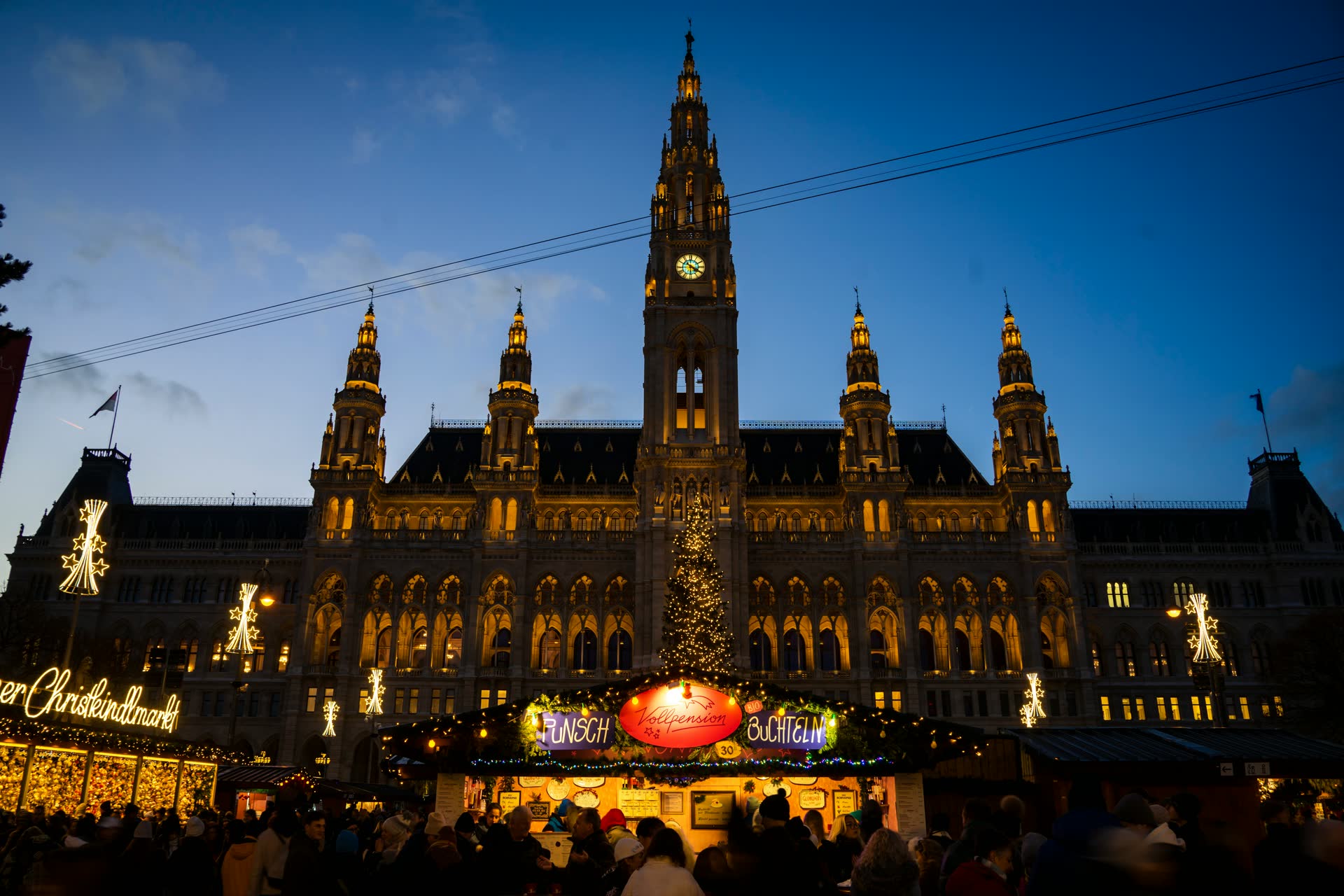
- Munich’s Marienplatz and Frauenkirche — Munich’s central square has been the city’s civic heart since its founding by Henry the Lion in 1158; the Neo-Gothic Neues Rathaus was built between 1867 and 1909. The Frauenkirche’s twin towers, part of a Gothic cathedral built in just 20 years starting in 1468, were completed in 1488 and remain the city’s skyline landmark.
- Rothenburg ob der Tauber — A walled medieval town whose fortifications, largely intact since the 14th century, run roughly 2.5 kilometers with 42 gates and towers. Rothenburg became the best-known stop on the Romantic Road, Germany’s oldest tourist route, established in 1950 to draw postwar visitors from Füssen to Würzburg.
The Rhine and the west
- Cologne Cathedral — Construction began in 1248 and wasn’t completed to its original medieval design until 1880; at 157 meters, it remains the tallest twin-spired church in the world. Germany’s most-visited landmark, drawing an average of 6 million visitors a year, it was inscribed by UNESCO in 1996.
- Upper Middle Rhine Valley — A 65-kilometer stretch of the Rhine gorge inscribed by UNESCO in 2002, dotted with around 40 hilltop castles and fortresses built over roughly 1,000 years, most left as picturesque ruins after 17th-century wars.
- Heidelberg Castle — First documented in 1214 and expanded into a major Renaissance residence through the 16th century, the castle was destroyed by French troops in the late 17th century and further damaged by lightning in 1764. Its unrestored ruins, among the most important Renaissance structures north of the Alps, became a symbol of the Romantic movement in the 19th century.
- Black Forest and Baden-Baden — The Black Forest’s dense pine hills anchor Germany’s southwest, and neighboring Baden-Baden — built up as a spa town from the early 19th century — was inscribed by UNESCO in 2021 as one of 11 towns in the Great Spa Towns of Europe listing, alongside Bath in England and nine others across seven countries.
Planning note
Berlin alone justifies 3-4 days between Museum Island’s five collections and the city’s Cold War sites. Munich and Neuschwanstein pair well as a single overnight trip south, with the castle reachable by regional train and bus from the city in about two hours each way. The Rhine Gorge and Cologne sit on the same north-south rail corridor, making a Cologne-to-Rhine-Gorge add-on straightforward without a separate route. If you are going in late November or December, Marienplatz and Cologne Cathedral both host Christmas markets, and our 2026 Christmas market dates for Nuremberg, Dresden, Munich and Cologne shows the window when all of them are open at once. A ten to fourteen day multi-city route covers Berlin, Bavaria, and the Rhine comfortably; Germany’s regional and high-speed rail network (ICE) makes city-to-city legs faster than driving on most routes.
Sources
- UN Tourism World Tourism Barometer, 2024 rankings
- Wikipedia — Brandenburg Gate
- UNESCO World Heritage Centre — Museumsinsel (Museum Island), Berlin
- Wikipedia — East Side Gallery
- Berlin Wall Foundation — Visitor Information
- Wikipedia — Neuschwanstein Castle
- AFAR — The New UNESCO Heritage Sites of 2025 (Palaces of King Ludwig II of Bavaria)
- Wikipedia — List of World Heritage Sites in Germany
- Romantische Strasse — Rothenburg ob der Tauber
- UNESCO World Heritage Centre — Cologne Cathedral
- Wikipedia — Cologne Cathedral
- UNESCO World Heritage Centre — Upper Middle Rhine Valley
- Wikipedia — Heidelberg Castle
- UNESCO World Heritage Centre — The Great Spa Towns of Europe
Read the Top 10 Countries to Visit in 2026 roundup for how Germany compares globally.